<?xml version="1.0" encoding="UTF-8"?>
<feed xmlns="http://www.w3.org/2005/Atom">
    <title>Cutting-edge Research and Social Contribution</title>
    <link rel="alternate" type="text/html" href="https://www.kochi-tech.ac.jp/english/power/" />
    <link rel="self" type="application/atom+xml" href="https://www.kochi-tech.ac.jp/english/power/atom.xml" />
    <id>tag:www.kochi-tech.ac.jp,2017-02-22:/english/power/46</id>
    <updated>2025-11-19T06:08:25Z</updated>
    <subtitle>On this page, we introduce some of the research conducted at this university.To see details of individual researchers, please view here.</subtitle>
    <generator uri="http://www.sixapart.com/movabletype/">PowerCMS Platform 6.3.8012</generator>

<entry>
    <title>Breaking new ground in future technology with optical vortices</title>
    <link rel="alternate" type="text/html" href="https://www.kochi-tech.ac.jp/power/research/post-92.html" />
    <id>tag:www.kochi-tech.ac.jp,2025:/english/power//46.6875</id>

    <published>2025-11-13T07:09:23Z</published>
    <updated>2025-11-19T06:08:25Z</updated>

    <summary> Twisting, bending, wiggling, bundling... How far can we change the world by &quot;manipulating&quot; light?Th...</summary>
    
    <content type="html" xml:lang="ja" xml:base="https://www.kochi-tech.ac.jp/english/power/">
        <![CDATA[<dl class="boxStyle01">
<dt>Twisting, bending, wiggling, bundling... <br />How far can we change the world by "manipulating" light?<br />This question is the challenge taken up by Professor Hirokazu KOBAYASHI of the School of Systems Engineering.<br /><br />Professor Kobayashi works with "optical vortices," a special form of light with a helical structure. <br />By controlling this seemingly mysterious light as he wishes, he makes the invisible visible, transmits information instantaneously, and even accesses the quantum world.<br /><br />The power to manipulate light is opening doors to the future of communication, sensing, medical, and quantum technologies.</dt>
<dd></dd>
</dl>
<p class="heading05"><b>What is twisted light with a dark hole in the center?</b></p>
<p class="Style1"></p>
<p></p>
<p>Doughnut-shaped light with a dark hole in its center that propagates along a helical path... This is a special form of light called an "optical vortex." By designing the light so that its propagation speed varies slightly from point to point, light that would normally travel in a straight line becomes twisted, resulting in this distinctive shape.</p>
<p>Professor Hirokazu Kobayashi is conducting cutting-edge research on the manipulation of optical vortices with the aim of linking them to future technologies. What inspired Professor Kobayashi, who was obsessed with electronic circuits and programming during his high school years, to venture into the world of light?</p>
<p>"Unlike electronic circuits, we can't build or control light itself with our hands. But with computers and electronic technology, we can manipulate light exactly the way we want. That's what I found fascinating."</p>
<div>
<p></p>
</div>
<div>
<div class="floatLayout imgL">
<figure><img src="https://www.kochi-tech.ac.jp/power/assets_c/2025/10/c4d74a0f7bd004db054c73d682630f65-thumb-1986x1419-40507.png" height="214" width="300" alt="Conceptual illustration of light waves propagating in a helical path" /></figure>
<p></p>
</div>
</div>
<div>
<div>Conceptual illustration of light waves propagating in a helical path</div>
</div>
<p></p>
<p>In advanced fields such as communication, sensing, medical, and quantum technology, light is an indispensable element. Professor Kobayashi's journey began with a simple curiosity: "I just want to create a slightly unusual kind of light." That interest has grown into wide-ranging research related to optical vortices.</p>
<p></p>
<div>
<p class="heading05"><b>The future of medical and communication fields opened by helical light</b></p>
</div>
<div>
<p></p>
</div>
<p>Helical structure is the most important characteristic of optical vortices and this unique structure is opening the door to various fields of application. "Things that are impossible with ordinary light become possible with this twisted light. That's what makes it so fascinating," he says with enthusiasm.</p>
<p>One example is <strong style="font-size: 1.4rem;">STED</strong> microscopy, which enables nanoscale observation of matter. By taking advantage of the dark center of the optical vortex, it can reveal fine structures with greater clarity than conventional light allows. This technology is attracting growing attention in the medical and biological fields for applications such as cancer cell diagnosis and nerve cell observation.</p>
<p>Professor Kobayashi and his team have developed an original technique (see figure below) that uses optical vortices to make the edges of cell nuclei appear more sharply than conventional methods. Because it can visualize even transparent structures by enhancing contrast only at their edges, it makes a significant contribution to improving the precision of microscopic observation.</p>
<p></p>
<p>The potential of optical vortices extends beyond their "power to see." Light is inherently well-suited for high-speed communications, and at present, information is primarily multiplexed by differences in the color of light. By adding shape--that is, optical vortices--it becomes possible to dramatically increase the amount of information transmitted simultaneously.</p>
<div class="Style1">"Even with the same red light, if we can distinguish between light traveling straight and light with a helical path, we can encode different information on each."</div>
<p class="Style1"></p>
<p>Furthermore, information density can be increased even further by multiplexing vortices with different helical paths on a single color of light. Professor Kobayashi and his team have developed a new method that enables them to flexibly control the helical structure of optical vortices, in single, double, or triple form. "With this technology, high-capacity communications 10 or even 100 times greater than ever before may no longer be just a dream," he says with growing excitement.</p>
<div>
<div class="Style1"></div>
</div>
<div>
<div class="floatLayout imgL">
<figure><img src="https://www.kochi-tech.ac.jp/power/img/1d0688ab3bf99ce3bf3992f4bfffd78c.png" alt="Enhanced edges of onion cell walls and nuclei captured with a microscope using optical vortices" height="214" width="300" style="float: left;" /></figure>
<p></p>
</div>
</div>
<div>
<div>Enhanced edges of onion cell walls and nuclei captured with a microscope using optical vortices</div>
</div>
<div>
<p class="heading05">Controlling even liquid crystals to quantum phenomena with optical vortices</p>
</div>
<p></p>
<p>Optical vortices can also set objects in motion. In collaboration with the Bordeaux University in France, Professor Kobayashi succeeded in controlling the alignment of liquid crystal molecules by exploiting the unique properties of optical vortices. Through both experimental and theoretical approaches, they elucidated the mechanisms by which liquid crystal molecules twist, rotate, and align in response to optical vortex parameters such as rotational speed and direction. This optical manipulation of liquid crystals could pave the way for next-generation light-driven devices, as well as biomedical sensing technologies that detect changes in liquid crystals optically.</p>
<p></p>
<p class="Style1">Optical vortices also demonstrate remarkable potential in "optical tweezer" technology, which uses the subtle pressure of light to trap and move microscopic particles without physical contact. This enables more sophisticated manipulation beyond simple translational motion, including particle rotation.<br />"We've found that the more complex we make the vortex--through doubling or tripling--the stronger the rotational force becomes. The technology we developed for controlling the structure of optical vortices should prove valuable in this area as well."</p>
<p class="Style1"></p>
<p></p>
<p></p>
<p>This "power to manipulate" that optical vortices possess extends into the quantum realm. In the field of quantum optics, where Professor Kobayashi is now focusing his efforts, manipulating individual photons can create new mechanisms for communication and computation. "This is research I've long wanted to pursue, and now everything is in place, and I'm working on it with my students," he says with a smile.</p>
<p class="Style1"></p>
<p>Quantum cryptography is already partially in practical use, but when it comes to "quantum light with vortices," there remains a lot of unknown territory, he says.<br />"Optical vortices can exhibit complex and unique behaviors that ordinary light cannot achieve. If we can harness those properties effectively, it will lead to more advanced computation and highly secure communications."</p>
<p></p>
<div></div>
<div>
<p><img src="https://www.kochi-tech.ac.jp/power/img/_X0A3139.jpg" width="300" height="200" alt="Kobayashi1" /></p>
</div>
<div>
<p class="heading05">From Unsung Hero to Future Star</p>
</div>
<p></p>
<p>The world of optical vortices holds diverse possibilities for application. Even when we simply say "manipulating" light, behind that lies a steady cumulative process through repeated trial and error. When we visited Professor Kobayashi's laboratory, precision optical components and devices were packed into every available space, with complex maze-like equipment spread across the experimental benches.</p>
<div class="Style1">"While picturing in my head the path light travels, the angle it reflects at, and the shape of the trajectory it traces, I tilt mirrors by increments of 0.1 degrees and position transparent elements in 0.1-millimeter increments. That's how I guide the light exactly where I want it."</div>
<p>Through numerous steps in this process, the optical vortex image finally takes shape. At that moment, he says, a feeling of deep satisfaction wells up inside.<br />"Something you've built with tremendous effort finally appears in visible form. That moment is more gratifying than anything."</p>
<p>While his research covers a wide range of themes, underlying them all is a commitment to "drawing out the full potential of light's degrees of freedom."<br />"Light is a phenomenon with many diverse faces. It can be freely controlled in terms of wavelength, color, intensity, polarization, and even the degree of its twist. By combining these properties, we can create functions and value that no one has yet seen. Light already works as an unsung hero in every aspect of our lives, but I believe my role is to continue exploiting technologies that draw out light's potential and thereby create new forms of light that will serve the next generation."</p>
<p>Looking toward the future, he concluded:<br />"Light technology is becoming a fundamental element on par with electricity. Before long, an era may come when all electrical circuits are replaced with optical ones." The possibilities of light are now entering a new stage. As part of that journey, Professor Kobayashi continues exploring a path that, together with light, will brightly illuminate the future.</p>
<p></p>
<p></p>
<p></p>
<p>Date of posting: November, 2025/ Date of interview: July, 2025</p>]]>
        
    </content>
</entry>

<entry>
    <title>A new era driven by better memory - aiming for a richer and more creative future</title>
    <link rel="alternate" type="text/html" href="https://www.kochi-tech.ac.jp/power/research/post-91.html" />
    <id>tag:www.kochi-tech.ac.jp,2025:/english/power//46.6764</id>

    <published>2025-06-17T23:59:42Z</published>
    <updated>2025-06-19T00:09:59Z</updated>

    <summary>Sleep is essential for all animals to live. Getting good sleep not only maintains mental and physica...</summary>
    
    <content type="html" xml:lang="ja" xml:base="https://www.kochi-tech.ac.jp/english/power/">
        <![CDATA[<p class="boxStyle01"><strong>Sleep is essential for all animals to live. Getting good sleep not only maintains mental and physical health but also plays a major role in memory consolidation. While it might seem like sleeping causes us to forget what we have learned, it has been found that sleeping actually makes memories more likely to endure. Professor Masaki Takeda, who conducts integrated research on brain and nerve function, from the level of cellular units to the entire human being, is focusing on this relationship between sleep and memory and attempting to elucidate the mechanisms of memory that occur in the brain during sleep using cutting-edge technology.</strong></p>
<p class="heading05">Among all cognitive functions, memory is what makes humans human</p>
<p></p>
<p><span lang="EN-US">The brain is one of the most mysterious organs in the human body. Many mysteries still remain about its complex and amazing workings. Professor Takeda, a neuroscientist, became aware of how the brain functions due to a simple question he had as a junior high school student.<o:p></o:p></span></p>
<p class="Style1"><span lang="EN-US">"I had a crush on a girl, and every day my head was completely filled with thoughts of her. Among the hundreds of millions of women in the world, why did I keep thinking only about that girl? My other friends didn't think anything special about her. I started wondering where this difference in thinking comes from."<o:p></o:p></span></p>
<p class="Style1"></p>
<p><span lang="EN-US">Due to this experience, he became interested in the flexibility of the brain that supports people's emotions, thoughts, and behavior, and he majored in psychology in university because he wanted to learn about "love." However, as his research progressed, he came to think that "in order to understand the human mind, it is necessary to study the brain itself," and from his master's program onward, he pursued the path of neuroscience.<o:p></o:p></span></p>
<p class="Style1"></p>
<p><span lang="EN-US">While immersed in brain and nerve research, Professor Takeda says he became convinced of one thing: that "among human cognitive functions, the most important is memory." He further emphasizes that "memory is what makes humans human."<o:p></o:p></span></p>
<div class="Style1"><span lang="EN-US">"We can remember and recall all kinds of things every day. This function called memory becomes the foundation for us to understand ourselves and form our identity."<o:p></o:p></span></div>
<p class="Style1"></p>
<p><span lang="EN-US">Beyond that, memory is also a matter of particularly great interest to us among the many cognitive functions such as memory, attention, judgment, understanding, and thinking.<o:p></o:p></span></p>
<div class="Style1"><span lang="EN-US">"For example, during our student days we think about how to memorize things efficiently before tests, and as we age we work hard at brain training to maintain our memory. Memory is deeply connected to daily life, and across generations there is a widespread shared understanding that we want to improve it. I find that aspect fascinating, and have consistently focused on memory."<o:p></o:p></span></div>
<p class="Style1"></p>
<p><span lang="EN-US">Professor Takeda is working to elucidate the mechanisms of memory, focusing particularly on "semantic memory," which involves remembering knowledge and concepts used in daily life. He explains that "semantic memory is indispensable when we memorize or recall something." For example, music we happen to hear can sometimes evoke nostalgic scenes or events from childhood. At such times, information like song titles and songwriters is stored in the brain as semantic memory. In other words, semantic memory is not merely fragments of knowledge, but something that supports our rich daily memory experiences.</span></p>
<p></p>
<p><span style="font-size: 1.8rem;"><img src="https://www.kochi-tech.ac.jp/power/assets_c/2025/05/_X0A3937_1-thumb-350xauto-39482.jpg" width="350" height="190" alt="Takeda2" /></span></p>
<p></p>
<p></p>
<p><span style="font-size: 1.8rem;"><span><span class="heading05">What is the "replay activity" that consolidates memory during sleep?</span></span></span></p>
<p></p>
<p><span lang="EN-US">Sleep is closely related to this memory. It is known that memory is consolidated through sleep. Professor Takeda: "They say the key to this memory fixation process is the 'replay activity' that occurs during sleep." What exactly is this phenomenon?<o:p></o:p></span></p>
<div class="Style1"><span lang="EN-US">"Replay activity is a phenomenon where the brain reproduces, while sleeping, events experienced or things learned during the day. For example, after memorizing colleagues' faces and names at a company orientation ceremony, the brain reproduces the brain activity from that time during sleep. Research with mice has confirmed that when replay activity is detected during sleep, memory performance improves after waking up."<o:p></o:p></span></div>
<p class="Style1"></p>
<p><span lang="EN-US">Professor Takeda's research team aims to detect replay activity during human sleep as well and to be the first in the world to clarify how it contributes to memory consolidation. However, because brain activity during sleep is extremely complex and very noisy, accurate detection is difficult with a single measurement method. Therefore, Professor Takeda and his colleagues have developed technology that simultaneously measures brain activity by combining functional magnetic resonance imaging (fMRI) and electroencephalography (EEG), establishing a method to record brain activity patterns more precisely. Furthermore, they are also developing high-precision analysis methods for brain activity data using deep learning.<o:p></o:p></span></p>
<p></p>
<p><span lang="EN-US">In parallel with this, they have also focused on "sleep slow waves," which are believed to be related to replay activity. Sleep slow waves are regular waves that appear in the frontal lobe of the cerebrum during deep sleep. Professor Takeda's team hypothesized that, if these waves are involved in memory consolidation, then enhancing them should improve memory performance after waking, while weakening them should degrade performance, and they conducted experiments on that basis. To do that, Professor Takeda and colleagues independently developed a "closed-loop system" that monitors brain activity during sleep, detects sleep slow waves in real time, and delivers electrical current stimulation to the brain in accordance with their timing. Using this system, they manipulated the strength of the waves and verified what changes occurred in memory performance.<o:p></o:p></span></p>
<div class="Style1"><span lang="EN-US">"In experiments with university students, we obtained results that matched our hypothesis: when sleep slow waves were enhanced, memory performance after waking improved, and conversely, performance declined when waves were weakened."</span></div>
<p class="Style1"></p>
<p><span lang="EN-US">Replay activity is also believed to involve deep regions of the brain that electrical stimulation cannot reach. Therefore, they have also begun new experiments using ultrasound stimulation. He explains: "Ultrasound stimulation can reach deep into the brain, enabling detection of activity in deep brain regions that was previously difficult." If this research progresses, it will likely bring us significantly closer to fully understanding replay activity.<o:p></o:p></span></p>
<div class="Style1"><span lang="EN-US">"Our strength lies in being able to conduct experiments using simultaneous measurement technology that takes advantage of our university's research environment, as well as the 'closed-loop system' we developed independently. This technology has made it possible to manipulate the strength of sleep slow waves. Furthermore, our attempts to analyze simultaneously measured brain activity data with AI are, as far as I know, the first in the world. We take pride in leading the world in research through the introduction of such cutting-edge technologies."<o:p></o:p></span></div>
<p></p>
<p><img src="https://www.kochi-tech.ac.jp/power/assets_c/2025/05/_X0A4159-thumb-350xauto-39484.jpg" width="350" height="233" alt="Takeda3" /></p>
<p></p>
<p class="heading05">Toward development of future wearable devices that enhance memory</p>
<p></p>
<p><span lang="EN-US">Professor Takeda's goal is to "develop devices that enhance human memory by applying research findings relating to memory."<o:p></o:p></span></p>
<div class="Style1"><span lang="EN-US">"More specifically, I envision a device that can be attached to a pillow to automatically monitor brain waves during sleep and deliver electrical stimulation at the most effective timing. This has two purposes: one is to maintain memory in elderly people, and the other is to improve memory in children. While memory capabilities have genetic factors, they also change flexibly depending on the environment and experiences after birth. I think there are many cases where people face disadvantages in life simply because they do not have good memory, and I want to raise every child's memory to at least a certain level. By doing so, I believe perhaps we can realize a society where people can reduce the time they've previously spent on memorization and develop their individuality through creativity and imagination."<o:p></o:p></span></div>
<p></p>
<p><img src="https://www.kochi-tech.ac.jp/power/assets_c/2025/05/_X0A4399-thumb-350xauto-39486.jpg" width="350" height="207" alt="Takeda4" /></p>
<p></p>
<p><span lang="EN-US">Creativity and inspiration do not come from nowhere. They are largely based on memory and experience. Improving memory should certainly help not only with learning but also with enhancing creativity and imagination.<o:p></o:p></span></p>
<div class="Style1"><span lang="EN-US">"However, technical challenges remain in developing such devices. While development of devices based on brain waves is progressing, there are still technical limitations in developing devices that utilize data from large MRI machines. In the research world, on the other hand, an extremely large number of results have been obtained using MRI. Therefore, I want to find a mechanism for converting MRI data into brain wave data. In that way, I want to develop devices that utilize MRI data, for which there is a tremendous accumulation of research, and disseminate them throughout society. I think it will still take time, but I am confident that practical application in the future is very possible."<o:p></o:p></span></div>
<p></p>
<p><span lang="EN-US">Professor Takeda's research has the potential to change our brain function, daily life, and society for the better. He will continue to tackle challenges going forward, aiming for a future where everyone has excellent memory and can freely exercise creativity.<o:p></o:p></span></p>
<p></p>
<p></p>
<p><span style="font-size: 1.4rem;">Date of posting: June, 2025/ Date of interview: March, 2025</span></p>
<p></p>
<p></p>]]>
        
    </content>
</entry>

<entry>
    <title>For the children who are the future of regional cities. Tackling the challenge of realizing a sustainable future-generation transportation network</title>
    <link rel="alternate" type="text/html" href="https://www.kochi-tech.ac.jp/power/research/post-88.html" />
    <id>tag:www.kochi-tech.ac.jp,2025:/english/power//46.6758</id>

    <published>2025-06-04T09:11:29Z</published>
    <updated>2025-06-09T00:16:57Z</updated>

    <summary>Transportation-related problems are becoming increasingly apparent in Japan against a backdrop of de...</summary>
    
    <content type="html" xml:lang="ja" xml:base="https://www.kochi-tech.ac.jp/english/power/">
        <![CDATA[<p class="boxStyle01"><strong>Transportation-related problems are becoming increasingly apparent in Japan against a backdrop of declining birth rates, an aging population, and population decline. Particularly in regional cities where life cannot function without cars, difficulties in maintaining services have arisen due to a decline in users of public transportation, in addition to road traffic problems such as traffic jams and accidents. Building a sustainable transportation system is a crucial element for maintaining people's quality of life and regional revitalization. <br />Professor Hiroaki Nishiuchi, who specializes in transportation engineering, is conducting research on the best approaches to transportation systems, with an eye to the future in regional cities facing these challenges.</strong></p>
<p class="heading05">He wants to provide children with road space as a place to play</p>
<p></p>
<div>In recent years, Professor Nishiuchi has been focusing in particular on how to support the mobility of children and the young generation. He explains the background behind his focus on children and the young generation as follows:</div>
<div>"By 2050, the population aged 65 and over is predicted to increase and account for approximately 40% of the total, while the young population (ages 0-14) will represent just under 9% of the total. Regional cities face a mountain of transportation challenges, but if we do not take action now, we may face even more serious transportation problems 25 years from now. This growing concern is the background behind my focus."</div>
<div><br />Professor Nishiuchi first focused on securing safe and secure transportation spaces for the future to protect children from traffic accidents. According to a survey conducted by Professor Nishiuchi and his team in Kochi Prefecture, they found that there was almost no difference in vehicle speeds between major roads and residential streets, highlighting the current situation where the distinction between different types of roads has become blurred.<br />"Particularly on residential streets, we found many cases where local residents speed through on shortcuts or engage in dangerous behavior due to familiarity with an area, revealing high risks of traffic accidents."</div>
<p></p>
<p><span style="font-size: 1.4rem;">He points out that the deeply rooted driver mentality of "cars have priority" is closely linked with this issue.</span></p>
<div>"Japan's road space, including residential streets, is car-centered, and I feel that drivers have a strong perception that 'cars have priority.' However, I believe the underlying cause is that road design is still being carried out with vehicle traffic as the premise, and this tendency is particularly pronounced in regional areas."</div>
<p>Professor Nishiuchi, who keenly felt the need to reduce traffic functions on residential streets and reallocate road space with pedestrian safety as the top priority, has been exploring ways to improve pedestrian traffic functions through policy/behavioral measures that utilize existing road space rather than large-scale infrastructure development.</p>
<div>"So I wondered whether we could restrict vehicle traffic on just the school route sections within residential streets for the sake of children, and realize spaces where they could walk to and from school safely while having fun playing."</div>
<p></p>
<div>To secure safe road spaces for children, he is working on developing children's Intelligent Transport Systems (ITS) that utilize information and communication technology. An ITS is a system that monitors vehicles, roads, and movement of pedestrians in real time to provide a safe traffic environment, but Professor Nishiuchi is using an ITS in a form specialized for children's walking behavior, aiming to improve safety on school routes.<br />"By accumulating evidence that vehicles must travel more safely on school routes, I want to move toward the recommendation that we need to consider school route management. Right now, I am conducting basic research for that purpose."</div>
<p></p>
<div>He began by first developing an understanding of the characteristics of children's walking behavior. More specifically, he took video of school routes adjacent to an elementary school in Kami City and used object detection libraries to collect data on children's movements from the footage. Using this data, he analyzed factors such as speed, direction of travel, and relationships with surrounding pedestrians and vehicles to examine what factors children use to determine their routes. Furthermore, he developed a "walking behavior model" incorporating the behavioral characteristics of children obtained from the analysis.<br />The analysis results showed that children's walking spaces tend to show more variation when coming home from school than going to school, with higher risks of sudden darting out and crossing. It also became clear that children have narrow fields of vision and walk without being sufficiently aware of their surroundings.<br />"Using these findings, I want to consider a system that can detect in real time the street sections and time periods where changes in children's walking behavior can occur, allowing dangerous situations to be avoided. Another thing I particularly want to do is regulate vehicle traffic in those sections and time periods to secure road space as a 'place to play.' While some areas in the Tokyo metropolitan region have introduced such initiatives, I think we should consider implementing this locally as well."</div>
<div></div>
<p>In regional cities experiencing population decline, protecting and nurturing children is a particularly important theme. Professor Nishiuchi's efforts to enable children to use roads with peace of mind will help support the future of those communities.</p>
<p></p>
<p></p>
<p></p>
<p><img src="https://www.kochi-tech.ac.jp/power/img/27c87c5f479357818e623c34d0537d06_5.jpg" width="350" height="233" alt="Nishiuchi2" style="font-size: 1.4rem;" /></p>
<p class="heading05">Exploring public transportation services attractive to the young generation through research and practice</p>
<p></p>
<p>Public transportation is a key alternative means of transport to replace cars in order to move away from a car-based society. However, Professor Nishiuchi emphasizes, "In Kochi Prefecture, particularly in hilly and mountainous areas, children and the younger generation have no opportunities to ride public transportation. That is precisely why I am conducting research from a perspective focused on children."</p>
<div>Public transportation in regional cities has fallen into a negative spiral of declining service levels due to decreasing users and reduced use frequency. To provide children and the young generation with future mobility options, it will be important to offer public transportation services that are attractive to the young generation.</div>
<div></div>
<p></p>
<div>Professor Nishiuchi and his group focused on "flat-rate services" where users can pay a fixed monthly amount to use multiple public transportation systems as many times as they want. This is one form of Mobility as a Service (MaaS) that optimally combines multiple public transportation options and provides integrated search, reservation, and payment functions. They conducted analysis based on questionnaire surveys to clarify what impact proposing services that allow flat-rate use of multiple public transportation systems--for which there are no examples of implementation yet in Kochi--would have on the behavior of residents along the routes. The results showed that while the intention to purchase declines as service prices increase, once the service is purchased, usage frequency increases.<br />"While we saw the completely natural psychology of people not buying expensive things, what I found really interesting was that as prices increase, purchasers' usage frequency also increases. In other words, we were able to confirm that when flat-rate services are introduced, people try to get their money's worth. On the other hand, we also found that use increases even when prices are at their lowest. Furthermore, it became clear that introducing this service could potentially attract about 20% of people who do not normally use public transportation."</div>
<div></div>
<p></p>
<div>It became apparent that flat-rate services are effective in increasing public transportation use frequency and could potentially lead to the revitalization of public transportation in regional cities.<br />"When we showed these results to public transportation operators, we received positive feedback such as proposals to create a common system through collaboration with bus companies that run parallel to railway lines. I hope we can make Kochi's public transportation increasingly interesting for children in this way."</div>
<div></div>
<p></p>
<div>Professor Nishiuchi has been involved not only in research on MaaS but also in practical initiatives. These include the "Public Transportation Usage Monitor" project implemented by the Kochi Prefecture Reihoku Regional Public Transportation Council, of which Professor Nishiuchi was a member. They recruited monitors from people who commute to school or work using public transportation from the Reihoku region in northern Kochi Prefecture. During the one-year activity period from April 2023, they provided full subsidies for public transportation fares and had participants play the role of sharing their daily experiences using public transportation on social media and communicating problems, improvement points, and other issues they encountered while using public transportation to the council.<br />"Seeing the posts that the high school student monitors uploaded to Instagram, members of the general public showed their support, and I think this initiative led to increased awareness of public transportation in the Reihoku region. On the other hand, in carrying out this practical initiative, we received a great deal of cooperation, such as JR Shikoku revising their schedule so that express trains would stop at the nearest Osugi Station, and Reihoku Kanko coordinating bus times with express and local trains. Thanks to these efforts, we learned well that even in mountainous areas like Reihoku, seamless public transportation services can be provided by utilizing what already exists. From these research and practical experiences, I realized that by making public transportation seamless in Kochi as well, young people might also take an interest. I hope to conduct further new research toward realizing this."</div>
<p></p>
<p class="heading05">Analyzing user behavior based on smart card data, to implement AI-driven marketing measures</p>
<p></p>
<div>In parallel with this research, Professor Nishiuchi has long been engaged in research that utilizes long-term data from DESUCA, the transportation smart card usable for streetcars and buses in Kochi Prefecture, to analyze user behavior patterns. This data accumulates usage history including users' boarding and alighting times and stations, enabling detailed understanding of how users utilize public transportation.<br />"Actually, Kochi's transportation data is quite comprehensive, and it's likely unusual worldwide for smart card data to be recorded in the same system for over 14 years. Using this long-term data, I want not only to understand user behavior patterns but also to create AI models based on smart cards and connect this to analysis of all kinds of transportation behavior."</div>
<div></div>
<p>From 2022 to 2023, "One Coin Day" was implemented, where using an smart card reduced streetcar and bus fares to 10 yen. When the effects of this policy were analyzed from the data, it was confirmed that groups who had not been using transportation before the discount began use as a result of the policy and continued use for a certain period afterward. In other words, it became clear that a certain number of people exist who will use transportation when fares become cheaper and they can get a sense of value, suggesting that implementing discount policies influences the promotion of public transportation use.</p>
<p></p>
<div>Furthermore, Professor Nishiuchi is now embarking on research to understand the characteristics of people who stop using public transportation as part of his research utilizing smart card data. He is attempting to interpret the behavior patterns and characteristics of people who had been using public transportation but gradually stopped using it, and to construct a model that predicts the possibility of discontinuing use. His ultimate goal is to develop use promotion measures tailored to users' behavioral characteristics.<br />"For example, we could individually display messages like 'Your next ride will be half price' when someone touches their smart card to the fare box. I would like to create a system where AI determines fares to suit individual users and consider marketing programs to prevent people from stopping their use."</div>
<p></p>
<p class="heading05">Aiming to build sustainable transportation systems for the future</p>
<p></p>
<div>Research based in Kochi faces a mountain of challenges, even among regional cities, but Professor Nishiuchi believes the environment offers unique strengths.<br />"Transportation engineering is an academic field studied worldwide, but I think there probably isn't much research like ours that considers the best approaches to future of road space and public transportation on the premise that regional cities are shrinking. Using data obtained, precisely because we are in a prefecture at the forefront of such challenges, to carry out analysis and gain new insights is something that can only be achieved by doing research in Kochi.<br />Also, in comparison with urban areas, we in Kochi are close to transportation stakeholders and can immediately report when research results emerge. Sometimes this leads to practical implementation. The fact that research directly connects to practical work is both the reward and the interesting aspect of conducting transportation research in Kochi."</div>
<p></p>
<div>Professor Nishiuchi has advanced multifaceted research on regional city transportation by leveraging the abundant data available in Kochi and close collaboration with the people in the field. At the foundation of this work is a strong desire to "change people's awareness that public transportation is for the transportation-disadvantaged."<br />"I think all Kochi Prefecture residents should recognize that public transportation is for all people, including the transportation-disadvantaged, children, and the young generation. Looking toward the future, I want to provide mobility options to children and the young generation and have them fully recognize these options. To achieve this, I want to seamlessly integrate our road space and public transportation research, create a vision for a new-generation transportation network, and take a step toward realizing sustainable transportation systems."</div>
<p></p>
<p><img src="https://www.kochi-tech.ac.jp/power/img/0ecdf8e0390361389a09fd199bd97f85_1.jpg" width="350" height="233" alt="Nishiuchi3" /></p>
<p></p>
<p></p>
<p><span style="font-size: 1.4rem;">Date of posting: June, 2025/ Date of interview: November, 2024</span></p>
<p></p>
<p></p>]]>
        
    </content>
</entry>

<entry>
    <title>Developing ultimate nanodevices through the understanding of a &quot;single atom&quot;</title>
    <link rel="alternate" type="text/html" href="https://www.kochi-tech.ac.jp/power/research/post-86.html" />
    <id>tag:www.kochi-tech.ac.jp,2025:/english/power//46.6626</id>

    <published>2025-02-13T05:40:13Z</published>
    <updated>2025-02-21T07:02:10Z</updated>

    <summary>Tiny particles called atoms make up everything around us. Air, water, and the human body all consist...</summary>
    
    <content type="html" xml:lang="ja" xml:base="https://www.kochi-tech.ac.jp/english/power/">
        <![CDATA[<p class="boxStyle01"><strong>Tiny particles called atoms make up everything around us. Air, water, and the human body all consist of these atoms. About 40 years ago, a revolutionary microscope was invented that could not only visualize atoms, which are invisible to the naked eye, but also manipulate them individually. This was the Scanning Probe Microscope (SPM). Professor Eiichi Inami is exploring the microscopic world using this specialized microscope as his key instrument, taking on the challenge of developing nanomaterials that could lead to innovations.</strong></p>
<p class="heading05">Atomic-level manufacturing to further advance microfabrication technology</p>
<p>From smartphones and electric vehicles to digital appliances, financial systems, and transportation infrastructure...Semiconductors serve as the key component driving the rapid advancement of digitalization. Professor Inami explains, "Through the dramatic evolution of semiconductor microfabrication technology, we have achieved higher performance, miniaturization, and improved energy efficiency across all systems." Smartphones are a prime example of this trend. The latest iPhone model contains 19 billion transistors. In other words, an incredible number of semiconductor components--so tiny that they are invisible to the naked eye--are densely packed into a device small enough to fit in the palm of your hand.</p>
<div>"Calculations that once took several days on large computers can now be performed instantly on smartphones. This is truly a gift of miniaturization."</div>
<p>"Atomic manipulation"--i.e., observing and moving individual atoms using a scanning probe microscope (SPM)*--holds great promise as a novel approach based on this principle to meet the growing demand for technological innovation. Professor Inami is working to advance this cutting-edge microfabrication technology. Using SPM, researchers are gaining deeper insights into material structures and properties at the single-atom level. This research not only enables the discovery of new material characteristics and functions but also facilitates the development of technologies that allow precise control over these properties.</p>
<div>"'Manufacturing at the atomic level' is a simple way to describe it. When you closely examine any material, you ultimately see an arrangement of atoms. We are trying to understand how different atom connections give rise to specific properties, and by deliberately altering these arrangements, we aim to discover new materials or find new characteristics of existing ones. Our goal is to utilize these insights to develop novel nanomaterials and realize high-functionality devices based on them."</div>
<p>*A microscope that can measure the shape and physical properties of a sample's surface at the atomic scale by tracing it with a sharp needle (probe) featuring a single atom at its tip. Unlike an optical microscope, it does not rely on lenses but instead consists of precision machinery and a monitor.</p>
<p></p>
<p><img alt="Inami1" src="https://www.kochi-tech.ac.jp/power/assets_c/2025/01/_X0A9335_3-thumb-2477x1651-38461.jpg" width="350" height="233" style="font-size: 1.4rem;" /></p>
<p class="heading05">Unveiling still-unknown atomic properties to drive the development of ultra-high-performance devices</p>
<p>Professor Inami has made numerous globally impactful discoveries through his previous research using SPM. One such breakthrough is the finding that when a small amount of visible light is shone on graphite, which consists of carbon atoms, part of it transforms into a material (called diaphite), exhibiting properties intermediate between diamond and graphite. While carefully investigating this phenomenon, he successfully became the first in the world to directly observe, at the atomic scale, a photo-induced phase transition--a process in which a material's structure and properties change upon exposure to light--and elucidated its underlying mechanism. Furthermore, he discovered that the phase transition process varies significantly depending on the wavelength of light, demonstrating that light tuning enables atomic-level control over the transition. These findings are expected to accelerate the development of new materials.</p>
<div>"Currently, while investigating the properties of this diaphite, we are also tackling the challenge of microfabrication that combines light and atomic manipulation. If this technology is realized, it will enable the precise arrangement of diaphite at the atomic level, similar to electronic circuits. Through this research, we aim not only to uncover the latent characteristics of diaphite but also explore how these properties can be intricately combined to create new functionalities and apply them to device development."</div>
<p>Nanoclusters--aggregates of multiple atoms--are known to exhibit dramatic changes in their properties depending on the number of constituent atoms. Professor Inami states that he and his team made a significant discovery while diligently conducting experiments to uncover hidden properties by precisely controlling the size of these nanoclusters at the single-atom level.</p>
<div>"When we arranged lead atoms one by one using the SPM probe, we discovered that when three atoms were placed nearby and a tiny current was applied, their positions shifted and then returned. In other words, we found that a cluster of three lead atoms can function as a switch at room temperature."</div>
<p></p>
<p><img src="https://www.kochi-tech.ac.jp/power/assets_c/2025/01/_X0A8955-thumb-2100x1400-38442.jpg" width="350" height="233" alt="Inami2" style="font-size: 1.4rem;" /></p>
<p></p>
<p>If a method can be developed to arrange these clusters at high density and reliably induce switching, it could pave the way for ultra-high-performance computers and devices.</p>
<p>Recently, he has been actively working on the development of new SPM-based devices. More than 40 years have passed since SPM was first developed at IBM's Zurich Research Laboratory in Switzerland, and performance improvements are now essential to keep pace with advancements in microfabrication technology. To address this, Professor Inami and his colleagues have devised a microscopy technique utilizing the pulsed voltage method. Pulsed voltage refers to a voltage waveform that rises sharply, remains for a short duration, and then drops sharply. His team is developing a novel approach that enables surface observation while applying a series of such pulses to the sample.</p>
<div>"With this new technology, we can not only observe the process of two atoms joining to form a molecule in more detail but also precisely measure the 'work function,' which is the minimum energy required to remove an electron from a material."</div>
<p>Expectations are growing for technological innovations that will further advance microfabrication technology.</p>
<p class="heading05">Aiming to pioneer a new field through the combination of light and atomic manipulation</p>
<p>Professor Inami is currently working on atomic-scale manufacturing, utilizing a wide range of techniques such as material analysis, processing, and equipment development. However, his fascination with the microscopic world began when he was in junior high school.</p>
<div>"In science class, when I saw a diagram showing the 'structure of atoms,' where several spheres were attached, I couldn't help but wonder, 'How do we know it looks like this if we can't see it?'"</div>
<p>He went on to study in the Faculty of Science at university. By analyzing material structures using methods such as X-ray analysis, he intellectually understood the atomic structures. However, his desire "to see atoms directly with his own eyes" only grew stronger. Then, the long-awaited moment arrived.</p>
<div>"During my master's program, a professor showed me an 'image of atoms neatly arranged.' It was so real that I was surprised. I got really excited, thinking, 'Can you see atoms!?' This was an image captured by SPM, and I suddenly became very interested, realizing that I could do fascinating research using this microscope."</div>
<p>Although he specialized in astrophysics as an undergraduate and studied the optical properties of materials during his master's program, this experience led him to pursue atomic manipulation using SPM. Since then, he has been working on a wide range of research themes, from microscopic to macroscopic, using SPM as his key research tool. In 2018, he joined Kochi University of Technology to establish his unique research approach, integrating all of his previous experiences.</p>
<div>"I've been affiliated with various university laboratories and have conducted research cutting across the fields of SPM, optical properties of materials, and surface science. At KUT, I am pursuing research to pioneer a new field by integrating these three areas."</div>
<p>Currently, he collaborates with other universities on cutting-edge research, while also working with KUT faculty members in information science to integrate AI into theoretical calculations that predict material properties from atomic structures. Through this approach, he is developing technology to predict various functions more quickly and accurately. At the core of his ambition lies a consistent goal: "I want to create unprecedented new devices by freely combining atoms."</p>
<div>"When materials are miniaturized to the extreme, unusual properties known as 'quantum phenomena' can emerge. Applications of these phenomena are already being developed, for example, in quantum computers that can perform ultra-high-speed calculations. In other words, nanotechnology is not just about enhancing the performance of existing systems based on conventional principles, but rather about dramatically changing them through entirely new principles that have never existed before. I'm convinced that atomic-scale manufacturing is the fastest path to realize truly innovative devices."</div>
<p>Date of posting: February, 2025/ Date of interview: November, 2024</p>]]>
        
    </content>
</entry>

<entry>
    <title>Helping to solve social problems through development of applications anyone can use</title>
    <link rel="alternate" type="text/html" href="https://www.kochi-tech.ac.jp/power/research/post-85.html" />
    <id>tag:www.kochi-tech.ac.jp,2024:/english/power//46.6470</id>

    <published>2024-06-20T01:36:32Z</published>
    <updated>2024-06-21T05:27:10Z</updated>

    <summary>What sort of systems meet community needs? The aim is to address burgeoning issues with digital tech...</summary>
    
    <content type="html" xml:lang="ja" xml:base="https://www.kochi-tech.ac.jp/english/power/">
        <![CDATA[<p><strong>What sort of systems meet community needs? The aim is to address burgeoning issues with digital technology. Shrinking population, declining birthrate, societal aging, more frequent large-scale disasters, declining economic power... Rural areas are facing a growing list of issues. As a faculty member in the School of Data &amp; Innovation, which was launched as the fifth school of the university in April 2024, Associate Professor Sachio SAIKI has been searching for ways to address these social problems. He's been exploring solutions that leverage the power of information technology and software, and to that end has proposed applications that are easy for anyone to use. Digital transformation (DX) aims to solve diverse issues with digital technology, and the potential benefits are especially great for rural areas with advanced depopulation and small and medium-sized enterprises. How will the research of Dr. Saiki play out in Kochi Prefecture, which is at the cutting edge of facing tomorrow's problems?</strong></p>
<p class="heading05">Development of a platform enabling routine cognitive function testing</p>
<p><span style="font-size: 1.4rem;">The vision of the School of Data &amp; Innovation (D&amp;I) is to spark innovation using data as a starting point, and contribute to the solution of global problems in Kochi. There are high expectations on Dr. Saiki as a leading figure in the drive to make this vision a reality.</span></p>
<div>Dr. Saiki--a graduate of KUT's School of Informatics (4th graduating class)--has a research policy of approaching social problems rooted in shrinking population, declining birthrate, and societal aging through the lens of information technology and software. One theme his subordinates are working on is R&amp;D on a system enabling remote diagnosis and day-to-day care for dementia to prevent isolation of the elderly staying at home.</div>
<p></p>
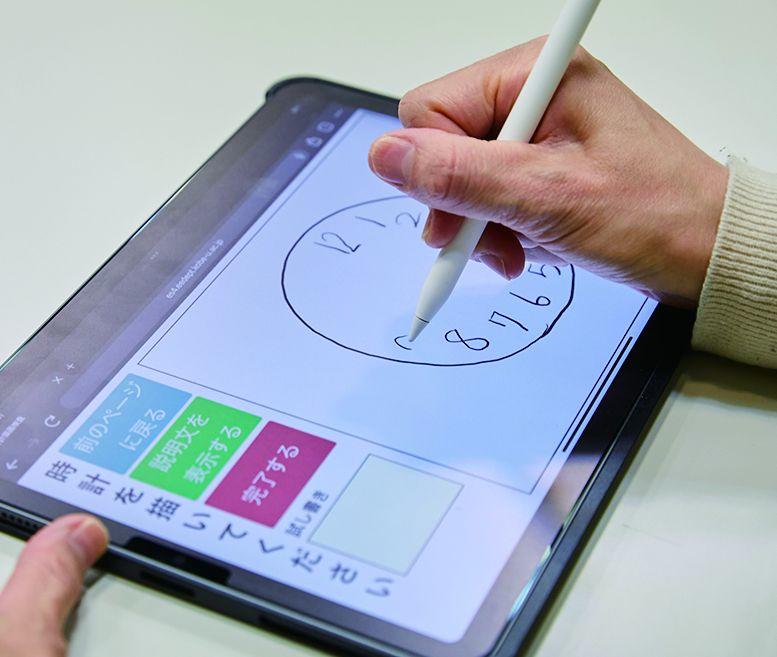
<p><span style="font-size: 1.4rem;">In light of the increase in dementia patients and worsening shortages of healthcare workers, early detection of dementia is being emphasized because it offers the promise of more effective treatment. The clock drawing test (where a patient draws a round clock at 10:10) and the cube copying test (where a patient draws a copy of a cube) are frequently used for dementia screening, and test scoring and diagnosis are generally done by healthcare workers who look only at the completed drawing. On the other hand, information on the drawing process, such as thinking time before drawing and the drawing sequence, are clearly connected with cognitive function, and there are calls to develop new scoring and diagnostic methods that make use of the drawing process.</span></p>
<p>In response, the research team of Dr. Saiki first proposed a technique for better visual representation of drawing tests, including elements of the drawing process like drawing sequence, thinking time, pen/pencil pressure, and speed.</p>
<p><img alt="SS1" src="https://www.kochi-tech.ac.jp/power/img/e5245e4138d582188e5bdefa6de5b327.jpg" width="250" height="211" /></p>
<p>"Hand trembling is closely connected with dementia, and healthcare workers can tell something is wrong from hand movements while drawing. Therefore, we developed an environment that can record all sorts of information during drawing, such as the number of times redrawing is done, drawing speed, pen/pencil pressure, and points where drawing was difficult/smooth. This allows the user to examine how the drawing was done, and in what sequence."</p>
<p>Furthermore, a system has been devised to integrate everything from drawing test implementation to examination of test results (including information on the drawing process) and diagnosis. The prototype system was verified in medical settings, care facilities, and ordinary homes, and the results showed that real-world use is possible.</p>
<div>"This system enables routine, at-home cognitive function testing for the elderly in foothill regions with no medical institutions nearby, and patients can be diagnosed by medical practitioners based on the transmitted results. This greatly alleviates the burden on both sides, and helps achieve early discovery of dementia."</div>
<p><span style="font-size: 1.4rem;">This system is not just a tool integrating steps from testing to diagnosis; it's also a vehicle for collecting digital data on drawing tests--an option that didn't exist before.</span></p>
<div>"The system is designed and implemented with an emphasis on general extendibility, and should accelerate collection of drawing data for various drawing tests. Going forward, we hope to gather large amounts of data using this system, and contribute to the development of drawing tests."</div>
<p></p>
<p class="heading05">Exploiting accumulated big data for more sustainable fire-fighting and emergency response</p>
<p>As the shift to digital progresses, more active steps are being taken to apply diverse data collected by national and local governments using ICT to programs and community development. With the cooperation of the Kobe City Fire Bureau, Dr. Saiki and colleagues are conducting research to realize sustainable fire-fighting and emergency response by using big data accumulated on fire-fighting and ambulance dispatching.</p>
<div>"Fire-fighting and ambulance dispatching data are expected to see use in data-driven approaches--such as prediction of demand for emergency response and fire-fighting, and optimization of resource management."</div>
<p></p>
<p>The key to speedy, efficient fire-fighting in an area is determining where and how many fire stations should be established by the fire departments of each local government, and how many vehicles to assign to each station. Under tight financial conditions, it is crucial to find an efficient configuration within the constraints of limited resources. Thus, to determine how far fire department organization meets the needs of each town and area in a city, Dr. Saiki has proposed a tool to support analysis and simulation of fire department configurations. Based on fire department configuration data and town/area data, this system enables automatic calculation of which vehicles will respond, in how many seconds, when a fire occurs in each town or area. It also provides a visual display of results on a map, and automatically calculates optimal positioning of fire departments based on various requirements.</p>
<p></p>
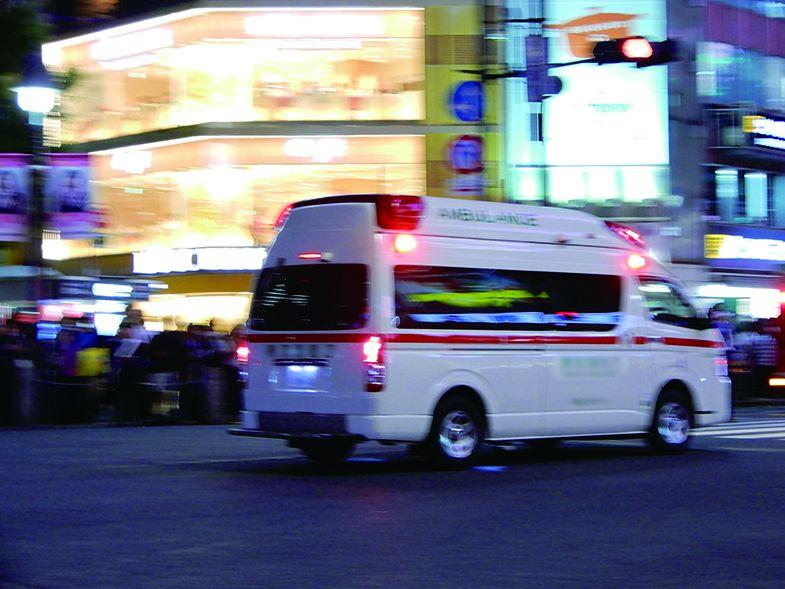
<p>Dr. Saiki has also analyzed ambulance dispatching data for heat illness, one factor behind the strain on emergency medical care. To plan sustainable countermeasures for heat illness with an eye to the future, he developed a model for predicting the number of persons transported for heat illness based on past weather data and ambulance dispatching data. He also developed an application for forecasting the number of persons transported for heat illness in the upcoming week by combining that prediction model with weekly weather forecast data.</p>
<p>To realize more efficient emergency response, he has also proposed a model for forecasting the number of ambulance transports in the medium/long-term, and he's moving forward with research to establish this model.</p>
<div>"What is crucial is not for us to do the analysis and present results. Rather, we should develop software that enables fire departments themselves to carry out simulations of all sorts of situations. A system supporting the simulations we've developed is being used by the Kobe City Fire Bureau, and the obtained results are employed as data for considering the best approach to fire-fighting administration in Kobe City over the medium and long-term."</div>
<p></p>
<p><img src="https://www.kochi-tech.ac.jp/power/img/084e473739a93b892f7af04a8724142c.jpg" width="250" height="188" alt="SS2" style="font-size: 1.4rem;" /></p>
<p class="heading05">Working with students as promoter of PBL education to accelerate practical application</p>
<p>A key pillar of education in the School of Data &amp; Innovation is Problem/Project Based Learning (PBL) where students work to solve issues in real-world society. In PBL classes, students collaborate with local governments, companies, and other organizations in Kochi Prefecture--uncovering issues, devising solutions, and learning the digital transformation (DX) process for moving from digitalization to social implementation.</p>
<p>The importance of practical education is widely recognized in Japan. Initial adoption of PBL at universities throughout Japan was driven by the Ministry of Economy, Trade and Industry's advocacy in 2006 of "basic skills for working adults" as essential for working with diverse people. Then in 2008, a project was launched by the Ministry of Education, Culture, Sports, Science and Technology to establish centers for broader dissemination of practical education in order to cultivate IT human resources for supporting growth fields. At that time, Dr. Saiki had just finished his doctoral course at KUT. He was in the right place at the right time and participated in this project as an assistant from KUT. Over the next 13 years, until 2021, he engaged with the PBL method through class improvement and evaluation techniques. From the very beginning, when implementation of PBL began at universities in Japan, Dr. Saiki has been a researcher at the cutting edge of pursuing the best approaches.</p>
<p>In the School of Data &amp; Innovation, he will exploit this previous knowledge to play a wide-ranging role covering not just his own research, but also PBL curriculum design, guidance for students, and efforts to promote understanding of PBL within the university. At this, he flashes an easy smile, saying "I think of myself as a sort of 'jack of all trades'." He says that in 2013 he was "hoping to return to KUT as a faculty member someday" even though he'd transferred from KUT to Kobe University. While mulling over his future direction, he learned that the School of Data &amp; Innovation was recruiting faculty members, and that's how he returned to his old haunts.</p>
<div>"Kochi is known as a prefecture at the cutting edge of facing Japan's future problems, and there is excellent potential for research to solve social problems with software. I always think there are many things we can do, so I want to keep steadily moving forward with people from the corporate world and local governments. When I entered KUT, there was a strong mood of 'let's do something new.' In the School of Data &amp; Innovation, I want to consistently support students as they take up new challenges, harking back to the spirit of those times. I want the school to come together as a team, and create an environment where students can pursue their dreams to the utmost, without fearing failure."</div>
<p></p>
<p><img alt="SAIKIsensei3.jpg" src="https://www.kochi-tech.ac.jp/power/img/db878476bea0c00a696d55ee2b77d82b_2.jpg" width="400" height="267" style="font-size: 1.4rem;" /></p>
<p></p>
<p><span style="font-size: 1.4rem;">Date of posting: June, 2024/ Date of interview: March, 2024</span></p>]]>
        
    </content>
</entry>

<entry>
    <title>Development of human-like living support robots for appropriate daily living support based on physiological needs</title>
    <link rel="alternate" type="text/html" href="https://www.kochi-tech.ac.jp/power/research/post-66.html" />
    <id>tag:www.kochi-tech.ac.jp,2024:/english/power//46.6423</id>

    <published>2024-03-25T08:34:29Z</published>
    <updated>2024-03-27T00:23:33Z</updated>

    <summary>At the age of 25, Professor Shuoyu WANG came to Japan aspiring to do research on state-of-the-art ro...</summary>
    
    <content type="html" xml:lang="ja" xml:base="https://www.kochi-tech.ac.jp/english/power/">
        <![CDATA[<p><strong>At the age of 25, Professor Shuoyu WANG came to Japan aspiring to do research on state-of-the-art robots. After taking a position at our university, he tackled the issue of the decreasing birthrate and aging population, developing "Human-Friendly Robotics" which work in cooperation with human beings. He developed and helped successfully commercialize the horse-riding fitness equipment "JOBA" (Panasonic) and the omni-directional training walker "ARUKING" (Soai) for supporting greater self-reliance of people with lower limb disabilities. In recent years, he has focused on refining previously developed technology, and designing robots to support the daily life of the bedridden elderly. He is establishing a highly advanced reasoning system, never seen before in the world, that recognizes a person's "physiological needs" and then acts accordingly by reasoning what best satisfies those needs.</strong></p>
<p class="heading05">Safety, simplicity, and integration of multiple functions into a single unit are keys to the spread of welfare robots</p>
<p>As society continues to age, the rising demand for nursing care and the shortage of caregivers have become pressing issues. While the development of support robots to lessen the burden of caregivers is flourishing, practical deployment in ordinary homes and facilities is lagging behind. Prof. Wang: "In addition to safety and simplicity of operation, integrating multiple functions into a single unit will be the key to greater dissemination of support robots in the future." He further points out that: "Most recently-developed support robots only have a single function. Robots with multiple functions such as cleaning and movement are needed by people with reduced physical function who require care, but having multiple robots in the home is not realistic due to cost and space."</p>
<p>The team led by Prof. Wang has developed a living support robot, integrating multiple functions into a single unit, which can carry out diverse types of tasks while the user is seated in a chair. This is achieved by maximally exploiting the upper body motor function of people with lower limb disability or elderly people with weak legs. A system was developed which uses motion sensors to detect the upper body movements of the user. The system thereby recognizes the operation intentions of the person, and carries out actions accordingly.</p>
<p>Prof. Wang's aim is to "allow users to live their lives as before by using this robot, so they can avoid becoming bedridden." At the same time, he has successfully developed safety control technology--a difficult problem in the field of support robots. As an accomplishment that will lead to the resolution of safety issues that have been a barrier to the widespread use of welfare robots, this work has received awards at international conferences and attracted worldwide attention.</p>
<p class="heading05">Toward the world's first living support robot capable of providing the same support as caregivers</p>
<p>As an evolution of previous achievements, an integrated multi-functional robot which provides a range of living support services to bedridden elderly individuals has been developed. Alongside omniwheels enabling omnidirectional movement and arms with seven degrees of freedom to replicate human motions, various sensors are incorporated for environmental perception. Therefore, the robot can offer daily support for diverse tasks with human-friendly movements, while navigating home spaces freely through obstacle avoidance.</p>
<p>The biggest difference from existing living support robots is that, even without specific instructions, the robot can recognize abstract physiological needs like hunger or thirst, and provide the appropriate support. Major Japanese manufacturers have already developed cutting-edge robots capable of actions like fetching objects, and opening and shutting curtains, but clear instructions must be provided like "please make me some tea" or "please set the room temperature to 25°C."</p>
<p></p>
<p><img src="https://www.kochi-tech.ac.jp/power/assets_c/2021/05/IMG_5728-thumb-250xauto-24999.jpg" width="250" height="167" alt="1" /></p>
<p>"When dealing with bedridden elderly people whose brain function has declined, expressing physiological needs such as hunger or thirst is much simpler than giving specific instructions. A robot is more practical if it can understand physiological needs and take appropriate actions to satisfy them."</p>
<p>Speech recognition, device operation, and other previous methods of interaction with robots are very difficult for bedridden elderly people. Thus, Prof. Wang proposed the idea of using colored information on cards as a simpler, smoother communication technique. There is a high probability of misrecognition if only a single color is used, so a "colored AR marker" system was developed. This improves the AR markers that were the ordinary 2D recognition method, with recognition carried out in two stages based on a square shape and a trichromatic color pattern. On the front side of the cards, there are various color patterns, and on the back side there are text and illustrations indicating physiological needs like moving, eating, or excretion. A request is made by presenting the front side of the card to the robot. Color discrimination also has the advantage that processing speed is fast compared to complex image processing. The results of experiments conducted at a distance of 4 m from bed to robot showed that recognition was possible with a probability of roughly 90% or higher.</p>
<p>A reasoning system has been developed to bridge the gap between physiological needs and the appropriate support. When a physiological need is recognized, the system can reason to the appropriate object based on a pre-constructed knowledge base, and plan a series of actions to satisfy that need. For the robot to behave like a caregiver, it must understand how different objects can contribute to satisfying physiological needs, e.g., tea satisfies thirst. This information is consolidated in the knowledge base needed for reasoning. First, the objects that satisfy each of the basic physiological needs are identified. Then the contribution of each object is indicated on a scale from 0.0 to 1.0, e.g., for quenching thirst tea has a value of 0.8 and milk a value 0.4, while for satisfying hunger, bread has a value of 0.9 and milk has a value of 0.3. In addition, a knowledge base optimized for an individual can be constructed by including information like the types of furniture and appliances in the home environment, and their layout. Prof. Wang: "Optimizing for the individual is extremely important in the field of care--more important than versatility." Values suited to each person can also be entered into the knowledge base.</p>
<p>A robot with a reasoning system, incorporating a knowledge base optimized for a specific individual, can provide appropriate support while constantly updating its knowledge in reference to changes in the environment. Experiments have shown that, in addition to routine tasks like handing the person a biscuit from the table in response to hunger, the system also successfully addresses unforeseen situations. For example, when there is no biscuit at the usual location on the table, the system can select milk as another applicable item, take milk from the refrigerator, and hand it to the user. Additionally, if a biscuit is placed on a table different than usual, and the robot notices that, the position information of the biscuit will be updated. According to Prof. Wang, no one else in the world is researching robots that provide support by reasoning about human physiological needs, and many requests for joint research have come in from researchers overseas.</p>
<p>Prof. Wang's biggest goal is to develop robots that can provide the same support as human caregivers. "I want to make living support robots with extremely simple operation suited to real conditions, and high intelligence for reasoning to specific objects from physiological needs. I want the robots to be practical and inexpensive, and available in the near future."</p>
<p></p>
<p><span style="font-size: 1.4rem;">Date of posting: March, 2024</span></p>]]>
        
    </content>
</entry>

<entry>
    <title>Deciphering consumer behavior based on the interplay of markets and culture</title>
    <link rel="alternate" type="text/html" href="https://www.kochi-tech.ac.jp/power/research/post-84.html" />
    <id>tag:www.kochi-tech.ac.jp,2024:/english/power//46.6416</id>

    <published>2024-03-21T08:48:11Z</published>
    <updated>2024-03-22T00:10:50Z</updated>

    <summary> Elucidating the mechanisms that give rise to consumer culture phenomena... When purchasing a certai...</summary>
    
    <content type="html" xml:lang="ja" xml:base="https://www.kochi-tech.ac.jp/english/power/">
        <![CDATA[<p></p>
<p><strong>Elucidating the mechanisms that give rise to consumer culture phenomena... When purchasing a certain product, we, as consumers, make choices unconsciously, starting from the category to which the product belongs. Typical examples of such categories are "smartphone" and "feature phone" for mobile phones, and "hybrid", "SUV", and "minivan" for cars. This classification is not limited to products. Everything around us--music, movies, foods, etc.--has genres, and culture and customs are intricately intertwined with the process that leads to classification. Assistant Professor Kohei ASAOKA specializes in consumer culture theory, a thriving research domain in the field of marketing. His focus is cultural phenomena shaped by consumption, and he is working to elucidate the mechanisms through which they arise.</strong></p>
<p class="heading05">What is this dynamic research domain, consumer culture theory?</p>
<p><span style="font-size: 1.4rem;">Consumer culture theory is a field of research aimed at constructing theories to elucidate the behavior of consumers towards goods and services, which has a cultural dimension. It also reveals the mechanisms whereby phenomena connected with that behavior emerge. As one domain in the theory of consumer behavior, the field was named by US researchers in 2005. The discipline has a short history, and was introduced for the first time to Japan in 2010 by Professor Takeshi MATSUI of Hitotsubashi University, a former teacher of Dr. Asaoka.</span></p>
<p>As one example, a culture of celebrating Halloween has taken root Japan in recent years, giving rise to a phenomenon where young people dress up, get together, and have boisterous parties. This is consumer behavior against a backdrop of markets and culture, and it cannot be elucidated with psychology alone.</p>
<div>Dr. Asaoka: "The hallmark of consumer culture theory--within the broader theory of consumer behavior--is its efforts to understand consumer behavior that cannot be reduced to psychological factors. This is done based on qualitative information such as media and interviews, while focusing on interactions of markets and culture."</div>
<p>Dr. Asaoka has been involved in this research since the early period when consumer culture theory first emerged in Japan. Why motivate him to delve into this new research domain?</p>
<div>"I've always liked music and I played in bands, but I was also interested in culture more broadly, like manga and games. In the field of marketing too, I was intrigued with treating the culture I love as a topic of research."</div>
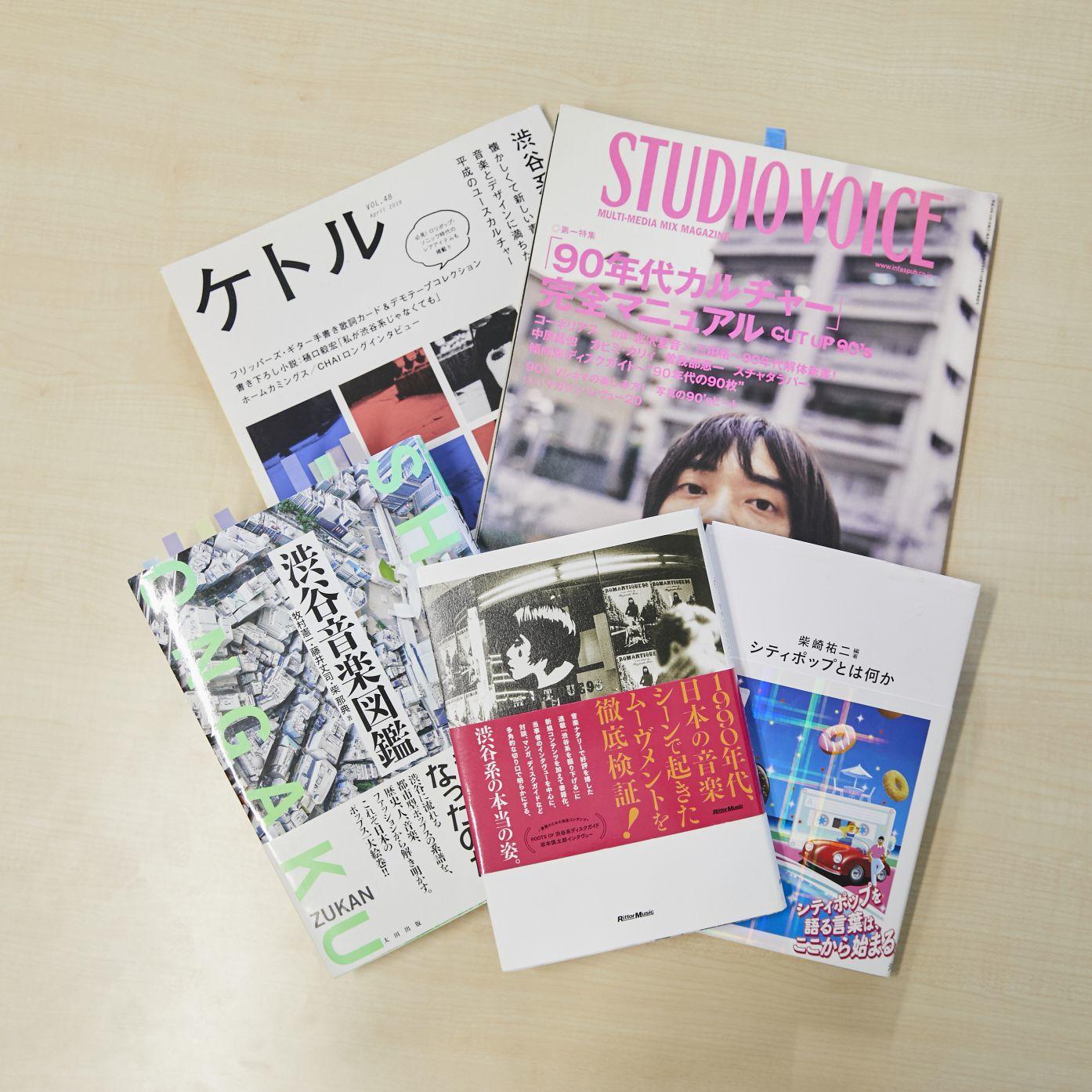
<p><span style="font-size: 1.4rem;">The theme which Dr. Asaoka has researched since 2015, when he began his doctoral program, is Shibuya-kei music. Shibuya-kei is a musical genre popular in Japan in the 1990s. Representative musicians include: Pizzicato Five, Original Love, and Flipper's Guitar. Dr. Asaoka, a music enthusiast, was drawn to Shibuya-kei as a research theme by a simple question "How does a music genre come into being?"</span></p>
<div>Dr. Asaoka: "The classifications and categories of things that we routinely use depend on culture and society. For example, when smartphones appeared on the market, previous mobile phones became known as "feature phones," thus giving rise to two classes of mobile phones. In that light, the question naturally arose: how do musical genres emerge in culture and society?"</div>
<p></p>
<p><img src="https://www.kochi-tech.ac.jp/power/img/938aa83e76cc23e85ba39b94f335f31d.jpg" width="350" height="233" alt="ASAOKAsensei3" style="font-size: 1.4rem;" /></p>
<p class="heading05">Categories emerge from the world of consumers</p>
<p><span style="font-size: 1.4rem;">In combing through previous research, Dr. Asaoka realized that three points were unclear: how ideas of new categories emerge, how they spread in the world, and how their use declines. Thus, he analyzed the process of the formation, dissemination, and decline of Shibuya-kei by looking at records of communication involving the word Shibuya-kei and the related social/historical context. For this analysis, he relied on a huge volume of data, consisting mostly of almost 1,000 magazine articles, as well as his own interviews with fans and people involved with the musical scene that came to be called Shibuya-kei.</span></p>
<p>Examining various types of data, he determined that before the word "Shibuya-kei" appeared, there was a community of people who liked the musicians who would later be grouped under the genre, and that they developed their own unique taste and values through local "scenes" like record stores and clubs in Tokyo.</p>
<p>The shared understanding cultivated within this community spread more widely because the staff in charge of Japanese music at the HMV Shibuya store were themselves part of the community. They understood its perspective, and created a specialized section of the store featuring the music that would come to be called Shibuya-kei.</p>
<div>In 1993, media interest was piqued by the discovery that "music sales in this specialized section diverged completely from the trends in the national charts." The story was covered using the label "Shibuya-kei," thus indicating wide recognition as a new musical genre.</div>
<p>Furthermore, Dr. Asaoka pointed out that Shibuya-kei declined in the late 90s because the word "Shibuya-kei" came to be used for other phenomena associated with the neighborhood of Shibuya, and thus it lost impact as a musical genre.</p>
<div>"Previously, category research in business administration and sociology has mainly been premised on new products created by companies. In contrast, I'd long thought that categories could emerge even without companies bringing new products to market. Through my research on Shibuya-kei, I was able to show that categories emerge due to the appearance of certain values, and it is possible for new category ideas to arise in communities of consumers."</div>
<p>The exploration of market category dynamics in this research seems poised to offer actionable insights for corporate marketing strategies. "Although the musicians who typified Shibuya-kei didn't really stand out in the category of Japanese music, they did stand out as representatives of Shibuya-kei. In other words, even if a product has limited market share, there exists a tactic of establishing a category in which the product excels, thereby drawing public interest. Showing this is one important result of my work, I believe."</p>
<p><img src="https://www.kochi-tech.ac.jp/power/img/469bfb5ab4385214775931d8450a0641.jpg" width="200" height="200" alt="ASAOKAsensei4" style="font-size: 1.4rem;" /></p>
<p class="heading05">Findings of consumer culture theory from the social media era</p>
<p>Although Shibuya-kei music continued to decline, it was taken up again by the media in the 2000s, and in recent years the term has increasingly been used as a musical genre name. Why do outdated categories reappear and persist in this way? Through further analysis, Dr. Asaoka discovered that Shibuya-kei resurfaced as a category linked with the 1990s. Two frameworks ("it influenced current culture" and "it's a word with an ambiguous meaning") were used to interpret the past phenomenon of Shibuya-kei and that had a major effect. This research clarified the mechanism whereby these phenomena appear.</p>
<p>Dr. Asaoka will likely continue to have a plethora of topics to explore in his work on Shibuya-kei. "Today, there are many stories about Shibuya-kei on blogs and social media. I want to gather those texts, and explore how the concept of Shibuya-kei is understood today, and whether the real voices of consumers play a role in the persistence of the category."</p>
<p>In recent years, the problem of social media backlash to corporate marketing activities has often been highlighted in the media. One factor here is lack of understanding of the consumer "context." In an era emphasizing communication between companies and consumers, there will be an increasing demand from the corporate realm for insights derived from consumer culture theory, which observes and understands consumer contexts through a theoretical lens.</p>
<div>"To understand consumer behavior more broadly and deeply, it is important to provide a perspective which complements psychological and econometric approaches. Going forward, I want to integrate different fields, tackle a variety of topics, and produce results that can contribute to business practice."</div>
<p>As a young researcher representing the future of consumer culture theory, Dr. Asaoka will pursue research activities from two directions--his own research, and efforts to develop the research domain--so that techniques of deciphering consumer context can take root in Japan.</p>
<p></p>
<p><span style="font-size: 1.4rem;"><img src="https://www.kochi-tech.ac.jp/power/assets_c/2024/01/a4e423d7b33692a82ecb89449d2fa9dc-thumb-350xauto-35080.jpg" width="350" height="233" alt="ASAOKAsensei5" /></span></p>
<p></p>
<p><span style="font-size: 1.4rem;">Date of posting: March, 2024/ Date of interview: November, 2023</span></p>
<p></p>]]>
        
    </content>
</entry>

<entry>
    <title>Pursuing super-energy-saving photonics employing highly diverse organic materials</title>
    <link rel="alternate" type="text/html" href="https://www.kochi-tech.ac.jp/power/research/post-83.html" />
    <id>tag:www.kochi-tech.ac.jp,2024:/english/power//46.6380</id>

    <published>2024-03-06T04:17:43Z</published>
    <updated>2024-03-06T07:39:21Z</updated>

    <summary>Macromolecules are used everywhere in our daily lives--in rubber and plastic products, paints, cloth...</summary>
    
    <content type="html" xml:lang="ja" xml:base="https://www.kochi-tech.ac.jp/english/power/">
        <![CDATA[<p><strong style="font-size: 1.4rem;">Macromolecules are used everywhere in our daily lives--in rubber and plastic products, paints, clothing, and numerous other applications. They have molecular weights of 10,000 or higher, and are also known as polymers, the generic term for extremely large molecules. Associate Professor Shotaro HAYASHI is striving to create "new materials beyond polymers" which have outstanding mechanical processability. He plans to achieve this through organic/polymer synthesis and molecular assembly chemistry focused on π-conjugated molecules, which are often used as organic electronics materials due to their unique electronic and optical properties.</strong></p>
<div><strong></strong><strong>In 2016, Dr. Hayashi successfully created a "flexible single molecular crystal"--a seeming impossibility from the standpoint of common sense--by using a unique design/synthesis strategy for π-conjugated molecules. He led the world in announcing his development technique, and has brought new innovation to organic materials chemistry. According to Dr. Hayashi, "It is especially significant that the crystal was created with π-conjugated molecules. These molecules have tremendous potential as a material." At present, he is energetically moving forward, developing photonics applications of these "flexible molecular crystals" which have such great potential.</strong></div>
<p class="heading05">Light-emission is an opportunity for application development</p>
<p>Molecular crystals have various functions, such as optical properties, electrical conductivity, and magnetism, and are a key material for realizing next-generation photonics and electronics. However, molecular crystals have a dense anisotropic structure where molecules are packed together, so although there is potential for higher performance, they lack flexibility, and are brittle and break easily. If we can freely design soft, pliant crystals, then perhaps new life can be brought to the materials field. With that idea in mind, Dr. Hayashi carried out crystal design based on molecule structure, using π-conjugated molecules (which have particularly high functionality among molecular crystals) to create "flexible molecular crystals" with density, anisotropy, and flexibility. In this process, he also discovered that these crystals have the property of emitting light and their light emission changes due to bending.</p>
<div>"In the beginning, I thought it would be interesting if we could use flexible molecular crystals in transistors for controlling the flow of electrons. However, as my research progressed, a new function appeared in addition to flexibility: light emission which varies due to deformation. This got me thinking about developing new applications."</div>
<p>For Dr. Hayashi, these discoveries were truly a golden opportunity. He is currently focusing on applications in flexible optical waveguides and optical resonators, which exploit the elastic deformation and light-emitting characteristics of flexible molecular crystals.</p>
<p></p>
<p><img src="https://www.kochi-tech.ac.jp/power/assets_c/2023/12/4c9888c07ec02e8c8ae1f06b65ad604c-thumb-350xauto-34781.jpg" width="350" height="233" alt="HAYASHIsensei2" style="font-size: 1.4rem;" /><img src="https://www.kochi-tech.ac.jp/power/assets_c/2023/12/5293ea644c724395f2452ab61c884713_1-thumb-350xauto-34784.jpg" width="350" height="207" alt="HAYASHIsensei3" /></p>
<p></p>
<p class="heading05">Dramatic improvement in photon transport functionality of flexible molecular crystals</p>
<p>To realize nano-micro-small optical communication devices, it is crucial to develop "self-emitting" optical waveguides requiring no contact with the light source and no angle adjustment because they employ light emission by the waveguide itself. However, previous self-emitting types lacked flexibility and strength, and when there is overlap of the substance's light absorption band and light emission band, the device absorbs its own light emission, resulting in an issue of low phototransport efficiency.</p>
<div></div>
<div>Dr. Hayashi and colleagues, in contrast, aimed to develop flexible, highly-efficient, self-emitting optical waveguides by using flexible molecular crystals. "I considered methods of raising the transport efficiency of light, and came up with the idea of 'incorporating foreign matter'." Exploiting that idea, he found that when a light-emitting molecule different from the flexible molecular crystal is added at a rate of 1 to 5%, there is transfer of energy between molecules. As a result, self-absorption of the guided wave is greatly suppressed, and photon transport functionality is improved by 15 times or more over previous crystals. This marked a major advance toward the previously difficult objective of a self-emitting optical waveguide system, and there are excellent prospects for real progress in developing more efficient optical communication devices.</div>
<p></p>
<p><img src="https://www.kochi-tech.ac.jp/power/assets_c/2023/12/6ba0fb29bdf06ff0d36c92c82087c2f3-thumb-350xauto-34786.jpg" width="350" height="233" alt="HAYASHIsensei4" style="font-size: 1.4rem;" /></p>
<p></p>
<p class="heading05">Developing diverse types of optical resonators using organic crystals and polymer crystals</p>
<p>Light has the property that once emitted, it diffuses, and a key question for achieving free control of light is how to strongly confine it to a micro-region. Ultra-small "optical resonators," whose structure confines light for a certain time, are used in practice in various applications, like laser oscillation, as devices which save energy because signal processing is performed with the confined light. Dr. Hayashi and colleagues are also developing high-performance, ultra-small optical resonators by using flexible molecular crystals.</p>
<p>In principle, an optical resonator works like this: incident light is confined in a space, and the signal is amplified by sending it back and forth, or in a loop, inside the device so that a specific stationary wave is produced, and a distinctive type of light is emitted. There are various types of optical resonators, but the most typical is a Fabry-Pérot mode resonator which achieves resonation by passing light back and forth between two mirrors arranged parallel to each other. Molecular crystals made up of regular arrays of molecules can easily assume a parallel configuration. Thus, Dr. Hayashi produced various flexible molecular crystals, and measured changes in their fluorescence spectrum due to bending deformation. This resulted in discovery of patterns derived from the resonance mode, and a Fabry-Pérot mode resonator employing a flexible molecular crystal was successfully developed.</p>
<p>Aside from this, Dr. Hayashi is developing various types of optical resonators exploiting crystal flexibility, such as ring resonators where the confined light continues to loop while being fully reflected. This type is achieved by forming flexible molecular crystals into a ring shape.</p>
<p>Organic/inorganic hybrid spheres with light-emitting characteristics have also been created through the simple adjustment of applying light-emitting polymer solution to ultra-small silica spheres about 5μm in size. When light was shined onto these spheres and confined, and changes in the fluorescence spectrum were measured, it was discovered that sharp light emission bands periodically appeared, indicating optical resonance inside the sphere. This showed that these spheres behave as Whispering Gallery Mode (WGM) resonators, a type of ring resonator.</p>
<p></p>
<p>"WGM is a mode where light travels along circular walls. It's like if you whisper inside a large circular dome, the waves of sound are transmitted by the walls, and your voice can be heard by a person on the other side of the dome. The WGM mode works on the same principle as this phenomenon. Light travels around near the surface of the sphere, strongly resonating, so the oscillating light is sharpened, and this is expected to improve light output and light detection sensitivity."</p>
<p>Dr. Hayashi believes the scope of application will greatly expand when this light-emitting organic/inorganic hybrid sphere is coated on various substrates for greater surface area.</p>
<div>"By using the coherent light emitted from these spheres, it will be possible to realize high-output, miniature RGB light sources, with potential applications in areas like laser displays and optic disk units. There are also high expectations for use as high-precision chemical sensors. Lately I've been wondering whether I can integrate a large number of these spheres into an iPhone chip, and realize a sensor that diagnoses people's health based on their breath. These spheres may be the "seed" of a new material with tremendous potential and a simple manufacturing method."</div>
<p></p>
<p><span style="font-size: 1.4rem;"><img src="https://www.kochi-tech.ac.jp/power/assets_c/2023/12/8d87a8be37d4792b9ffaa9ed6d59a948-thumb-350xauto-34788.jpg" width="350" height="233" alt="HAYASHIsensei5" /></span></p>
<p class="heading05">Aiming to establish a new academic domain beyond the boundaries of science</p>
<p><span style="font-size: 1.4rem;">Resonators are also a key component of laser oscillators, and Dr. Hayashi wants to expand his R&amp;D on optical resonators to lasers.</span></p>
<div>"Photons move in a straight line and experiences less attenuation, so it is used for laser communications where information is transmitted over long distances. By integrating ultra-small optical resonators and increasing area, I want to develop laser oscillators which gather sunlight in outer space, where it is hard to use as energy, onto a single point for signal transmission to the earth's surface."</div>
<p><span style="font-size: 1.4rem;">If it's possible to change the current mainstream, inorganic laser media to organic types, it will also be very advantageous in terms of both cost and energy.</span></p>
<div>
<p>"There is future potential, I feel, in using organic materials to develop super-energy-saving laser oscillators that collect large amounts of weak light and convert it into laser light. Organics have more diversity of structure than inorganics, but so far only single molecules have been used in applied science. In recent years, as the fusion of organic chemistry and physics has progressed, a foundation for exploiting that diversity has come together. Exploiting that foundation will greatly boost the potential for creating new materials."</p>
</div>
<p>Due to opportunities like this, Dr. Hayashi has recently participated in applied physics and laser conferences, and he is actively collaborating with other fields.</p>
<p>Even before that, in his laboratory, he designed and synthesized molecular structures starting from the functions he wanted them to manifest, devised design methods for crystal structures where many molecules are arranged in an orderly structure, and carried the development through to the end--not just evaluation of the characteristics which appeared, but also applications of the developed materials. Dr. Hayashi is committed to an interdisciplinary research style, and revolutionary research results have been consistently announced by his laboratory over the last few years. Many have attracted outside attention, being featured in academic journals and other media both inside and outside Japan. What drives this rapid progress?</p>
<p>"I do interdisciplinary research simply because I enjoy it. When I create a new substance, I don't stop there. I look at it from every angle, and persistently investigate its unknown points. That's what really motivates my research. Kochi University of Technology has an excellent culture that facilitates collaboration with other fields in research and interdisciplinary joint research. That sort of research environment is definitely a plus for me."</p>
<p>Dr. Hayashi's biggest goal, on which he's staked his research life, is to systematize paths from molecule design to applied development of devices, and establish a new academic domain that transcends the boundaries of materials science. Going forward, he will continue pushing toward its realization with original ideas and sound practical skills.</p>
<p><img src="https://www.kochi-tech.ac.jp/power/assets_c/2023/12/af5d805452a9dd562d0d3311c3f862f7-thumb-350xauto-34790.jpg" width="350" height="233" alt="HAYASHIsensei6" /></p>
<p></p>
<p><span style="font-size: 1.4rem;">Date of posting: March, 2024/ Date of interview: October, 2023</span></p>]]>
        
    </content>
</entry>

<entry>
    <title>&quot;CES structures&quot; have both high earthquake resistance and outstanding buildability -- What are they?</title>
    <link rel="alternate" type="text/html" href="https://www.kochi-tech.ac.jp/power/research/post-81.html" />
    <id>tag:www.kochi-tech.ac.jp,2024:/english/power//46.6382</id>

    <published>2024-03-05T00:35:52Z</published>
    <updated>2024-03-05T06:27:13Z</updated>

    <summary>Establishing a next-generation type of architectural structure for use in Japan, a country known as ...</summary>
    
    <content type="html" xml:lang="ja" xml:base="https://www.kochi-tech.ac.jp/english/power/">
        <![CDATA[<p><strong>Establishing a next-generation type of architectural structure for use in Japan, a country known as the "Land of Earthquakes." Japan is a small island country whose land area is less than 0.25% of the world total, and yet about 20% of earthquakes of magnitude 6.0 or higher occur in and around Japan. There are also concerns about a massive earthquake in the near future, such as a Nankai Trough earthquake. To minimize earthquake damage, it will be increasingly important to develop, design, and build worry-free earthquake-resistant architectural structures. Another pressing issue will be securing future workers for construction sites as the working population continues to age.</strong></p>
<div><strong>Associate Professor Suguru SUZUKI, whose specialty is seismic engineering, aims to solve these two problems in one swoop. He is conducting R&amp;D on a new concrete structure called concrete encased steel (CES) which has both outstanding buildability--requiring no skilled techniques--and excellent earthquake resistance. CES structures composed only of fiber-reinforced concrete and a steel frame are garnering attention as a potential mainstream type of architectural structure in Japan, the "Land of Earthquakes" as it faces an era of population decline.</strong></div>
<p class="heading05">Indicating a sound path towards practical use of CES structures</p>
<p>Even among people aware of reinforced concrete (RC) construction and steel (S) construction as building structure types, many have likely not heard of steel-framed reinforced concrete (SRC) construction, which combines RC and S construction. SRC construction was developed in Japan in the Taisho period, and evolved in a unique way. It has been used in large-scale buildings and high-rise buildings as an architectural structure with outstanding earthquake resistance. However, since 1990, there has been a rapid decline in the number of buildings constructed in Japan, mainly due to longer construction periods and higher costs driven by complicated design and construction. Still, the results of a survey of building damage caused by the 1995 Great Hanshin earthquake showed that the overall earthquake resistance performance of SRC construction was significantly better than other structures. Thus, R&amp;D was started in 2001 in Japan on the CES structure, which consist only of a steel frame and fiber-reinforced concrete (FRC), as an architectural approach which achieves superior buildability while harnessing the high seismic resistance of SRC construction.</p>
<div>"With CES structures, the steel reinforcement of SRC construction isn't removed. Instead, its function of preventing falling of concrete is replaced by using FRC, i.e., concrete strengthened by adding vinylon fiber. With this simple approach, FRC is simply poured onto a steel frame, so there is no need for the complicated rebar work required in SRC construction. As a result, we can expect shorter construction periods and lower construction costs while ensuring high earthquake resistance."</div>
<p>CES structure is especially suited to Japan, an earthquake-prone country where there are concerns about the shrinking working population. Dr. Suzuki got involved with this research around the first year of his Master's program. A teacher from his undergraduate days happened to be the originator of the CES structure, and he began experiments and analysis to evaluate structural performance--critical work for achieving practical use of the CES structure.</p>
<p>Thirteen years later, in May 2022, the book <i>AIJ Guidelines for Structural Design of Concrete Encased Steel (CES) Buildings Based on Performance Evaluation Concept (Draft)</i> was published by the Architectural Institute of Japan. This book was written collaboratively by Dr. Suzuki and his colleagues, and presents a well-defined roadmap towards practical use of CES structures.</p>
<div>"In this book, I explained a structure design method for earthquake-resistant walls, and an analysis model for structural members in CES structures. These will be essential for structural analysis in designing buildings with a CES structure. I especially want students, who will be the next-generation structure designers, to read this book and contribute to the development of architectural structures."</div>
<p></p>
<p><img src="https://www.kochi-tech.ac.jp/power/assets_c/2023/10/_X0A3936_1-thumb-autox517-34076.jpg" width="350" height="517" alt="SUZUKIsensei3" style="font-size: 1.4rem;" /></p>
<p class="heading05">First to clarify the structural performance of column bases in CES structures</p>
<p>Amid high expectations for future dissemination of the CES structure, Dr. Suzuki looked at the "column base part," the boundary between the building and foundation. This was a point that had previously lacked thorough verification. He is currently analyzing dynamic properties, from cracking to failure, and researching the earthquake resistance performance of buildings by using the dynamic characteristics of structure performance.</p>
<p>CES structures with encased steel have two column base types, depending on whether the steel frame is embedded in the foundation structure. The non-embedded type is superior to the embedded type in terms of buildability, but earthquake resistance is far inferior to the embedded type, so each type has both advantages and disadvantages.</p>
<div>"In building design and construction, various factors--construction period, cost, earthquake-resistance, and so on--are complexly intertwined. So we, as researchers, believe it's important to foresee all sorts of situations, carry out various performance evaluations, and thereby provide a wide range of options so designers can select the best option for their circumstances."</div>
<p><img src="https://www.kochi-tech.ac.jp/power/assets_c/2023/10/_X0A4101-thumb-350xauto-34070.jpg" width="350" height="233" alt="SUZUKIsensei4" style="font-size: 1.4rem;" /></p>
<p></p>
<p>Dr. Suzuki began with a structure experiment. The aim was to observe cracking after applying forces simulating earthquake motion to an embedded-type test specimen. The results confirmed that: first, the shallower the depth of embedding, the lower the resistance to shearing force, and second the magnitude of the resistance force differs depending on whether or not there is a base plate supporting the embedded steel frame. This work showed, for the first time, the structural performance of embedded column bases in a CES structure.</p>
<p>Next, in order to improve earthquake-resistance with the non-embedded type, Dr. Suzuki carried out structural experiments by fabricating a test specimen with anti-slip reinforcement on the underside of the base plate. The results here confirmed that anti-slip reinforcement improved resistance to shearing force, but there was damage to foundation concrete on the side surface of the test specimen, so the approach had disadvantages rather than advantages.</p>
<p>Researchers, like Dr. Suzuki, who are doing both experimental and analytic research in the field of seismic engineering are unusual, and he sees this as one of his strengths. "By conducting research from both experimental and analytic perspectives, I'm not limited to theoretical calculations. I can also experimentally demonstrate force flows and resistance in concrete in response to earthquake motion, and numerically express previously considered hypotheses"</p>
<p>In each experiment on column bases, he also observed the maximum force the structure can bear without failing, and he is developing those results into proposal of member bearing capacity evaluation formulas necessary for designing CES structures.</p>
<p class="heading05">Encountering CES structures shaped his research life</p>
<p>Dr. Suzuki aims to advance seismic engineering in Japan, and he is working on many themes aside from this research. One example is a system he has built to enable visualization of the concrete cracking of an entire building, which occurs in an earthquake, by using high-resolution photo data from before and after deformation. This system also enables automatic determination of the degree of damage.</p>
<div>"Visually observing the small cracks that appear throughout a building is time-consuming and troublesome. It's just not realistic. So I developed a system that enables automatic judgment via a technique called Digital Image Correlation (DIC), and I hope it can dramatically improve efficiency in determining the safety of buildings, which is necessary after an earthquake."</div>
<p>Dr. Suzuki is from Shizuoka Prefecture, an area likely to be struck by a Nankai Trough earthquake. There were periodic disaster drills from the time he was in elementary school, and disaster-safety hoods on every student's chair. He had many opportunities to think about earthquakes due to the vulnerability of his home region. He also accompanied his grandfather, a tatami maker, and often saw local homes under construction, and this influenced him in choosing the path of earthquake-resistant design which combines earthquakes and architecture. Looking back on his research activities, he says "My encounter with CES structures has shaped my life."</p>
<p><img src="https://www.kochi-tech.ac.jp/power/assets_c/2023/10/be8052c8897ed78a49a642627b704e5f-thumb-350xauto-34072.jpg" width="350" height="233" alt="SUZUKIsensei5" /></p>
<p></p>
<p>"Few people are researching CES structures, so the more I work, the more results I can produce. I can do research with the enthusiasm of establishing a new structure type in the world, and that's a big motivation."</p>
<p>When we hear the term "architectural design," people tend to think of the artistic side of design, but Dr. Suzuki wants his students to be strong structure designers. Here, we can see his ideas in a nutshell: "We're doing architecture in Japan, so we can't get away from structural issues."</p>
<div>"CES is a structure type I want people to use in an earthquake-prone country like Japan. I eagerly look forward to the day when I can see, with my own eyes, the first building built with a CES structure, and going forward I will continue my experiments and analysis to further improve the precision and reliability of CES structures. My goal is to be the leader in this field, trusted by society as the "go-to" person on the topic of seismic engineering."</div>
<p><span style="font-size: 1.4rem;">Date of posting: March, 2024/ Date of interview: July, 2023</span></p>
<p></p>
<p></p>]]>
        
    </content>
</entry>

<entry>
    <title>Opening up new fields of materials chemistry with elastic molecular crystals</title>
    <link rel="alternate" type="text/html" href="https://www.kochi-tech.ac.jp/power/research/post-67.html" />
    <id>tag:www.kochi-tech.ac.jp,2024:/english/power//46.6381</id>

    <published>2024-03-04T07:27:37Z</published>
    <updated>2024-03-05T00:35:33Z</updated>

    <summary> Organic materials typically exhibit a trade-off between crystallinity and flexibility--the common-s...</summary>
    
    <content type="html" xml:lang="ja" xml:base="https://www.kochi-tech.ac.jp/english/power/">
        <![CDATA[<p></p>
<p><strong>Organic materials typically exhibit a trade-off between crystallinity and flexibility--the common-sense view being that organic molecular crystals are not flexible. Associate Professor Hayashi had a feeling that this received wisdom could be overturned, and he noticed slight movements in the crystal structure of π-conjugated molecules, often used as organic photonics and electronics materials due to their unique optical and electronic properties. By using independently discovered design/synthesis strategies for these π-conjugated molecules, he has developed "elastic molecular crystals"--single crystals with flexibility--and produced new materials in which these crystals have light-emitting properties. These results are expected to catalyze new innovations in materials, beyond the scope of polymer materials.</strong></p>
<p class="heading05">Creating flexible crystals composed of π-conjugated molecules</p>
<p>"π-Conjugated molecules" have garnered attention in recent years as basic materials in the field of organic electronics. The relatively free movement of electrons within these materials results in unusual properties like semiconductivity, conductivity, and light-emission. Dr. Hayashi aims to create new materials going beyond polymers by employing organic/polymer synthesis and molecular assembly chemistry. The key is these π-conjugated molecules.</p>
<p>Organic photonics/electronics materials are broadly classified into two types: small-molecule single crystals and polymer resins. Small-molecule single crystals have a dense, anisotropic structure with tightly packed molecules, promising high performance. However, their low flexibility renders them fragile and prone to breakage. Polymer resins, in contrast, exhibit properties exactly the opposite of single crystals. Although they offer flexibility, attaining optimal performance is hindered by their structure, which contains numerous gaps. This is the common-sense view of the "trade-off between crystallinity and flexibility" in molecular assemblies.</p>
<p>If organic molecular crystal materials could be endowed with flexibility, it would greatly expand the possibilities of organic material chemistry. With that idea in mind, Dr. Hayashi set to work developing new materials combining the advantages of single molecular crystals and polymer materials. Keeping in mind the "slip mechanism" of π-conjugated molecules in crystals, he successfully developed a new material, elastic molecular crystals, with outstanding density, anisotropy, and flexibility by cycling through the molecule design and synthesis process. He also discovered phenomena like chromics in light-emission induced by deformation. There have previously been no reported examples of elastically-deformable single crystals composed of π-conjugated molecules, and Dr. Hayashi announced these elastic crystals as a world first. These new materials with both flexibility and high performance are attracting attention as a route to new possibilities for small-molecule materials and new material innovations. Dr. Hayashi has this to say about the background of the development: "If the inside of a crystal has a crooked structure, the molecules cannot move, but I thought: if there is a mechanism allowing movement, movement should be possible no matter how tightly packed they are. That's when I got the idea of producing a "slip mechanism" for molecules. I noticed the high planarity of π-conjugated molecules, increased their planarity to the limit, crafted a design to prevent molecule twisting and distortion, and then executed that design through repeated synthesis."</p>
<p>When force is applied to the crystal, bending occurs due to its molecular planes shifting in one direction. They then return to their original state. Repeated changes in color also occur due to this characteristic, so Dr. Hayashi is exploring applications in "optical waveguides." These waveguides are used for components like optical fibers that have both high radio wave efficiency and composition.</p>
<p>Dr. Hayashi says what drives him in research is "witnessing new phenomena and the development of new materials." He believes the novel idea of a flexible crystal material may revolutionize materials chemistry. "Creating new materials bridging the gap between single crystals and polymers, with their completely different properties, will blur the boundaries of materials science. I think that's where the potential for innovation lies."</p>
<p>By embracing free thinking in his approach to polymer and crystal materials, Dr. Hayashi is pioneering not only novel materials but also new fields.</p>
<p><img src="https://www.kochi-tech.ac.jp/power/assets_c/2021/05/IMG_3-thumb-250xauto-25007.jpg" width="250" height="171" alt="HAYASHIsensei3" style="font-size: 1.4rem;" /></p>
<p class="heading05">Developing fully-recyclable functional fiber materials</p>
<p>Dr. Hayashi is developing fully-recyclable functional fiber materials as one application of elastic crystals.</p>
<p>Fiber materials used in industry are usually made of macromolecule polymers. Unfortunately, large amounts of waste are produced in raw material synthesis, and even recovery and reuse of products incurs costs for washing and processing. Chemical recycling--involving breakdown and recovery on the molecular level--is not easy in terms of methods or costs, and there are limits on conventional recycling systems for synthetic chemical fibers. Small-molecule monomers, on the other hand, can be easily dissolved by organic solvents, allowing full breakdown and recovery of molecular units, but they are fragile and hard to handle as fiber materials.</p>
<p>To overcome such issues, it is crucial to develop new fiber materials that excel in both waste reduction and recycling. Here, Dr. Hayashi conceived the idea of producing functional fibers from small-molecule monomer units by exploiting the flexibility of elastic crystals. The idea is to realize a full recycling process, which cannot be achieved with fiber materials using polymers as a raw material, and exploit the unique functions of single crystal fibers. "While synthesizing elastic crystals, I realized we can produce long, thin crystals with behavior similar to fibers. I thought that perhaps fibers could be produced by leveraging this property effectively."</p>
<p>According to Dr. Hayashi, deliberately inducing elongated crystals in elastic substances causes them to assume a fibrous morphology, and entanglement occurs so they exhibit a light, fluffy texture similar to fibers composed of polymers. By harnessing the efficient light-absorption capabilities of elastic crystals, it may be possible to employ them as functional fiber materials that block UV light. Dr. Hayashi is keen on "advancing towards practical implementation through collaborative research with companies that have expressed an interest."</p>
<p>Before starting his research on crystal engineering, Dr. Hayashi's specialty was polymer science. "I've been very interested in fiber materials for a long time," he says.</p>
<div>"Many researchers are exploring applications of organic single crystals to devices, so I want to move away from that and propose applications from a completely different perspective. Fiber materials, I believe, have the greatest potential as an industrial application of elastic crystals, and they are the closest to practical use. I'm convinced I can fully exploit my own expertise in polymers in developing applications to fiber materials."</div>
<p><img src="https://www.kochi-tech.ac.jp/power/assets_c/2021/05/IMG_5829-thumb-250xauto-25009.jpg" width="250" height="194" alt="HAYASHIsensei4" style="font-size: 1.4rem;" /></p>
<p></p>
<p><span style="font-size: 1.4rem;">Date of posting: March, 2024</span></p>]]>
        
    </content>
</entry>

<entry>
    <title>The unique structure of &quot;nanoporous metals&quot;: Key to developing innovative catalyst materials</title>
    <link rel="alternate" type="text/html" href="https://www.kochi-tech.ac.jp/power/research/post-65.html" />
    <id>tag:www.kochi-tech.ac.jp,2024:/english/power//46.6351</id>

    <published>2024-01-19T08:07:52Z</published>
    <updated>2024-02-19T05:29:50Z</updated>

    <summary>Atoms are the smallest constituents of materials and matter. Professor Takeshi Fujita aims to fabric...</summary>
    
    <content type="html" xml:lang="ja" xml:base="https://www.kochi-tech.ac.jp/english/power/">
        <![CDATA[<div><strong><span style="font-size: 1.4rem;">Atoms are the smallest constituents of materials and matter. Professor Takeshi Fujita aims to fabricate nanostructures from all sorts of materials, and create new functions, by using an electron microscope enabling detailed observation of these atoms. Within the diverse domain of nanostructures, nanoporous metals stand out as a subject of interdisciplinary research cutting across specialized fields. These metals are "sponge-like bodies" in which nanosize pores are connected at random inside the material. With the high electrical conductivity typical of metals and increased surface area from pores, nanoporous metals have enhanced catalytic activity, raising expectations as a catalyst material to replace conventional nanoparticles. Prof. Fujita and his team have established a "dealloying" technique for easier fabrication of nanoporous metals. By using this technique, they are developing innovative catalyst materials.</span></strong></div>
<p class="heading05">Development of nanoporous catalysts to reduce environmental impact</p>
<p>In developing the concept of "dealloying," a technique for producing nanoporous metals, Prof. Fujita and his collaborators were inspired by the phenomenon whereby specific elements selectively elute from an alloy due to corrosion. The technique is very simple and involves simply alloying metals that are stable and metals that are unstable to corrosion, and then performing selective corrosion with an electrolytic solution. Prof. Fujita: "No special experimental equipment is needed to fabricate nanoporous metals through dealloying, so the technique is very simple and has great potential."</p>
<p><span style="font-size: 1.4rem;">Among the diverse functions of nanoporous metals, catalyst applications are particularly promising. In previous nanoparticle catalysts, multiple nanoparticle metals were arranged on the surface of an oxide. Only the vicinity of the nanoparticle was active, and other regions were not effectively used. A nanoporous catalyst, on the other hand, has a structure in which metal is complexly entangled with oxides, and thus not only does the active region greatly expand, the active time of the chemical reaction can be maintained for a long time because it has high durability.</span></p>
<div>Prof. Fujita is convinced that "nanoporous catalysts with high catalytic activity can be used in a wide variety of chemical reaction systems." Using their characteristics, he has developed catalysts to "more effectively use methane and carbon dioxide, greenhouse gases that have an adverse effect of the global environment." The dry reforming of methane (DRM) reaction is attracting attention as a method for manufacturing valuable synthesis gas from methane and carbon dioxide. However, a significant carbon emitting reaction occurs at temperatures less than 600°, and this causes catalyst deactivation and degradation of reaction equipment. Therefore, temperatures of 800° or higher are needed, and practical application has not been achieved. Prof. Fujita and colleagues set out to drive stable, long-term DRM at lower temperatures, and they successfully fabricated a "rooted catalyst" with braid-like entanglement of metallic nickel and oxide yttrium due to dealloying. Results so far indicate that this is an industrially adaptable catalyst, and practical application looks realistic.</div>
<p>Prof. Fujita has also begun developing a revolutionary new catalyst system which allows DRM to be driven at room temperature by a high voltage applied to the nanoporous catalyst (a conductor) and causing corona discharge<sup>*2</sup>. One recent trend is to optimize chemical reactions for industrial purposes by leveraging external fields, such as light or an electric field, as the driving force to control the reaction path and speed. With conventional nanoparticle catalysts, however, the reaction only proceeds near the nanoparticles dispersed on the surface of an oxide, so extremely low coupling efficiency between the catalyst and external field is an issue. To solve this problem, Prof. Fujita and colleagues turned to nanoporous catalysts because they can accumulate electric fields on their surface. The idea was to bring the electric field of the catalyst surface closer to the gas which generates the external field through corona discharge, thereby improving the coupling efficiency with the external field, and activating the catalytic reaction. Experiments with the developed equipment confirmed that the catalyst accelerates the reaction through corona discharge.</p>
<p>Other innovative results have been accomplished, promising substantial reductions in environmental impact. One notable achievement involves applying acid etching and heat treatment to impart electrical conductivity to a metal-organic framework (MOF) initially impermeable to electricity. This transformation successfully converts it into an exceptional catalyst for water electrolysis.</p>
<p>*2) Phenomenon which occurs due to the non-uniform electric field when a high voltage is applied to a local point like a sharp electrode</p>
<p><img src="https://www.kochi-tech.ac.jp/power/assets_c/2021/05/1ea19fe4e3f0520d246569507c8f9071-thumb-250xauto-24721.jpg" width="250" height="132" alt="FUJITAsensei3" style="font-size: 1.4rem;" /></p>
<p class="heading05">Striving for a "universal catalyst"</p>
<p>Another major theme Prof. Fujita is exploring is the development of "super multi-element catalysts" combining multiple elements.</p>
<div>He is pushing forward with this research, driven by the idea that "combining many different elements may lead to additional effects, and the creation of catalysts with exotic functions." Thus far, he has successfully fabricated catalysts incorporating 12 elements, but he is eager to "incorporate even more elements." The high number of incorporated elements is not the only notable point about this research. The ability to fabricate the catalysts with a simple method based on dealloying is also highly significant. The procedure is very straightforward: just fabricate an alloy of the pertinent elements and aluminum, cool and form into a ribbon, and then submerge in an alkaline solution, where the aluminum is selectively corroded. Prof. Fujita: "It's been said that crafting an alloy with 10 or more elements is hard, yet we achieved it with an extremely simple method. In conducting research, I think it's important to set aside preconceived ideas."</div>
<p>Behind this success was an idea based on "reversal." A bottom-up technique was used to make previous multi-element catalysts, building up elements one by one. Prof. Fujita and his colleagues had the opposite idea. They used a "top-down" technique of first fabricating a composite alloy of multiple elements and then optimizing the end product by removing those that are unneeded. This overturned the received wisdom regarding catalyst design techniques, and led to dramatic progress.</p>
<p>The final objective of Prof. Fujita's research in this area is a universal catalyst that works in all reactions.</p>
<div>"By placing numerous elements in the reaction field, and endowing the material with complexity (entropy) comparable to that of life, perhaps we can develop a catalyst which deforms on its own into forms adapted to any reaction, and can withstand diverse reactions. We are working hard with that possibility in mind."</div>
<p>The method of choosing elements is also important for fabricating multi-element catalysts. On that front, Prof. Fujita is planning to merge catalyst science and data science, and develop a system for finding optimal combinations of elements. In March 2021, the university installed a state-of-the-art electron microscope equipped with outstanding features like high resolution and wide-ranging analytic capabilities. "This equipment will likely drive a quantum leap in the progress of our research," says Prof. Fujita with conviction.</p>
<p><img src="https://www.kochi-tech.ac.jp/power/assets_c/2021/05/_X0A9984_1-thumb-250xauto-24719.jpg" width="250" height="239" alt="FUJITAsensei4" style="font-size: 1.4rem;" /></p>
<p></p>
<p><span style="font-size: 1.4rem;">Date of posting: February, 2024</span></p>
<p></p>]]>
        
    </content>
</entry>

<entry>
    <title>Solving local and global issues by realizing high-efficiency energy devices based on nanomaterials</title>
    <link rel="alternate" type="text/html" href="https://www.kochi-tech.ac.jp/power/research/post-70.html" />
    <id>tag:www.kochi-tech.ac.jp,2024:/english/power//46.6350</id>

    <published>2024-01-19T03:10:31Z</published>
    <updated>2024-01-19T05:41:30Z</updated>

    <summary>Due to the rapid progress of nanotechnology, researchers are continually discovering extremely high-...</summary>
    
    <content type="html" xml:lang="ja" xml:base="https://www.kochi-tech.ac.jp/english/power/">
        <![CDATA[<div><strong>Due to the rapid progress of nanotechnology, researchers are continually discovering extremely high-performance electronic and optical properties derived from the structure and size of nanomaterials. Professor Hiroshi Furuta has developed metamaterials with novel electronic, optical, and thermal properties by controlling the structure of carbon nanotubes (CNTs) and other nanomaterials. He has also researched applications of these materials in high-efficiency energy devices.</strong></div>
<div><strong></strong><strong><span style="font-size: 1.4rem;"></span></strong><strong style="font-size: 1.4rem;">CNTs are composed only of carbon, one of the most plentiful substances on earth, and yet they show great promise as a material with high electrical and thermal conductivity. Prof. Furuta's overarching theme is to solve local and world energy problems by using CNTs to realize high-performance materials and devices.</strong></div>
<p class="heading05">Eliciting new properties of light through nanoscale circuit design</p>
<p>Metamaterials are artificial structures, such as electrodes, with circuit design at a scale larger than atoms and molecules, but smaller than electromagnetic waves. They exhibit properties and functions unattainable with ordinary materials. CNTs are a promising component of metamaterials due to their outstanding electrical and optical characteristics. Previously, the mainstream nanotechnology technique has been a top-down process of producing fine-patterns by processing materials. This process is approaching the lower limits of size, however, and that is sparking active research on bottom-up approaches, where atoms and molecules spontaneously form into ordered structures of higher dimensionality.</p>
<p>CNTs can be grown like plants simply by supplying carbon source gas to nanoparticles of catalyst deposited on a substrate. Due to this "self-organized growth process," CNTs promise easy bottom-up fabrication of the fine-patterned, complex structures indispensable for metamaterials.</p>
<p>We see self-organized patterns everywhere in the natural world. Examples include the sophisticated washing function of the surface of a snail's shell and the adhesive function of the bristles that grow on the toes of lizards. Many organisms employ nanotechnology built through self-organization. In imitation of the self-organizing phenomena observed in nature, Prof. Furuta has produced various nanostructures using CNTs, and identified unique functionalities with potential applications in metamaterials.</p>
<p>High-density CNTs aligned in the same direction perpendicular to a substrate are called a "CNT forest" because they look like a forest of trees. This material is attracting attention as the "blackest of all substances," capable of absorbing light of all wavelengths with high sensitivity. In their efforts to fabricate metamaterials using CNT forests, Prof. Furuta and his colleagues developed a technique for forming microparticle arrays in the shape of a split ring resonator (SRR)--one form of metamaterial--by patterning catalyst microparticles with a focused ion beam (FIB). Evaluation of the properties of CNT forests with an SRR structure, fabricated with this technology, showed that reflection intensity of infrared light is reduced by a resonance phenomenon in the circuit, so that metamaterial performance is exhibited. This achievement, the world's first case of fabricating a metamaterial with CNTs, was featured in a prestigious journal and received high acclaim.</p>
<p>Prof. Furuta has also noticed the structures formed, through self-organization, by low-density CNT forests under a carbon film, and successfully controlled the structure thickness. He was the first to discover the outstanding optical characteristics of these structures, and he named them "frost column-like CNT forests" due to their similarity to frost columns. He has shown that frost column-like CNT forests processed into a fishnet form, with periodic holes opened in the carbon film, have increased absorption of infrared light compared to unprocessed structures, thus eliciting their metamaterial characteristics.</p>
<p><span style="font-size: 1.4rem;">Building on these achievements, Prof. Furuta and his team are pioneering the field of "CNT forest metamaterials."</span></p>
<div><span style="font-size: 1.4rem;"></span>"CNT forest metamaterials are an exciting crossover field that allows us to create heretofore unseen properties through circuit design. Harnessing the advantages of CNTs, including the ability to create environmentally friendly systems that selectively absorb and utilize specific wavelengths, as well as CNTs' superior heat resistance, opens up possibilities for applications in efficient solar energy systems. This is particularly advantageous where metal metamaterials with low melting points faced challenges."</div>
<p><img src="https://www.kochi-tech.ac.jp/power/img/furutahiroshi1.jpg" width="350" height="186" alt="FURUTAsensei3" style="font-size: 1.4rem;" /></p>
<div>(Plasma sputtering unit: Deposits ultra-microparticles of catalyst, a type of carbon nanotube)</div>
<p class="heading05">Development of fabrication techniques for larger-area CNT forest metamaterials</p>
<p>Larger area will be needed to apply CNT forest metamaterials to energy devices. However, increasing area is acknowledged as technically difficult when using FIB processing techniques. Thus, Prof. Futura and colleagues have developed a new technique for building up CNT forests through self-organization. This technique uses the dry etching method, crucial for semiconductor integration, as an alternative method. They have demonstrated the ability to control the absorption and reflection of specific wavelengths--a hallmark of metamaterials--using CNT forests produced through this technique. By fabricating CNT forests with self-organizing techniques allowing larger area, and discovering their metamaterial characteristics, they may have found a key to realizing large-area CNT forest metamaterials.</p>
<p>Prof. Furuta is also developing high-efficiency solar water heaters, utilizing CNTs to bridge these research outcomes with practical applications. His investigations so far have focused on improving performance. For example, he has compared the temperature increases of commercial materials and CNTs as a light absorbent, and discovered that temperature rises more readily with CNTs.</p>
<p><span style="font-size: 1.4rem;">Through this sort of R&amp;D, Prof. Furuta hopes to use nanomaterials to help solve global energy problems. He aims to create low-cost, environmentally-friendly energy devices, to help address energy challenges in rural areas and developing countries.</span></p>
<div>"Japan wants to shift the energy supply system from a large-scale centralized model to an autonomous decentralized model employing renewable energy. The need for autonomous decentralized power is especially high in Kochi, where villages are dispersed in mountainous regions. In collaboration with the "Satoyama Social Implementation Model Project" of our university, my goal here in Kochi is to realize small-scale energy devices that are manageable by individuals."</div>
<p>One of the UN's Sustainable Development Goals (SDGs) for 2030 is to secure access to safe and affordable drinking water for all people worldwide. In this connection, Prof. Furuta says "We are also looking at using technology for recovering unused thermal energy, in the process of producing distilled water from seawater in developing countries." Prof. Furuta has demonstrated the potential of CNTs in all areas, from basic research to applications. Going forward, he will continue to think outside the box, drawing inspiration from nature, and developing nanotechnology to contribute to the sustainable development of humankind.</p>
<p><img src="https://www.kochi-tech.ac.jp/power/img/furutahiroshi2.jpg" width="327" height="233" alt="FURUTAsensei4" /></p>
<p></p>
<p><span style="font-size: 1.4rem;">Date of posting: January, 2024/ Date of interview: April, 2022</span></p>
<p></p>
<p class="MsoNormal" style="mso-outline-level: 1;"></p>
<p></p>]]>
        
    </content>
</entry>

<entry>
    <title>Elucidating brain processing systems adapted to the real world via VR technology enabling free construction of virtual worlds</title>
    <link rel="alternate" type="text/html" href="https://www.kochi-tech.ac.jp/power/research/vr.html" />
    <id>tag:www.kochi-tech.ac.jp,2024:/english/power//46.6349</id>

    <published>2024-01-19T03:04:18Z</published>
    <updated>2024-02-20T04:29:23Z</updated>

    <summary>Human beings see a world with three-dimensional depth based on two-dimensional images projected onto...</summary>
    
    <content type="html" xml:lang="ja" xml:base="https://www.kochi-tech.ac.jp/english/power/">
        <![CDATA[<p><strong>Human beings see a world with three-dimensional depth based on two-dimensional images projected onto the retina. We don't just see the retinal images per se; we perceive three-dimensional imagery not by directly observing what is projected onto the retina, but rather through the brain's processing to infer and reconstruct a three-dimensional world. The complex information processing systems of the brain are crucial for receiving information from the outer world via the eyes, ears, and other sensory organs, linking these inputs with appropriate action, and adapting to the real-world environment. Professor Hiroaki Shigemasu is elucidating the nature of this information processing in the brain by using cutting-edge technologies, like virtual reality (VR) and functional magnetic resonance imaging (fMRI). He is trying to grasp the universal characteristics of human beings with these approaches.</strong></p>
<p class="heading05">Clarifying the functions of each brain region through experiments using MRI</p>
<p>The brain's information processing plays a major role in human perception. However, we still lack a complete picture of how brain areas respond to different perceptions. Prof. Shigemasu uses fMRI, a technique for imaging brain activity, to elucidate the brain mechanisms involved in three-dimensional perception. In previous experiments, he has discovered that brain regions show different activation patterns when looking at differences in the depth position between objects versus looking at depth-direction structure inside objects, and he has elucidated the functions of each brain region.</p>
<p>The brain's information processing does more than just perceive the three-dimensional world from vision and other inputs. It must also output appropriate actions based on that information. Prof. Shigemasu realized that "to elucidate the brain's processing system, we must also consider action," and he broadened his research to regions involved in motor output. Which specific areas within the brain handle the processing of input information relevant to motor output? To elucidate this question, Prof. Shigemasu conducted experiments where participants were first shown an object, and then immediately afterwards the object was hidden, and they were asked to grasp the object with their hand by inferring its orientation under conditions with no visual information. Brain activity during the experiment was measured with MRI. The results showed that the orientation of the object can be decoded from the activity pattern of the visual region, even when there is no visual input in real-time. He is currently engaged in empirical studies showing that various types of active processing are carried out relating to motor output based on visual brain areas which have previously been thought to process mainly passive visual input.</p>
<div>"While many questions remain regarding how brain regions relating to motor output work, we've discovered that the processing in visual brain areas is closely connected to motor output for manipulating objects. And that finding has helped develop my research."</div>
<p>This elucidation of brain regions is likely to be useful for realizing brain-machine interfaces that allow operation of a machine or computer based on brain activity.</p>
<p><img alt="SHIGEMASUsensei3" src="https://www.kochi-tech.ac.jp/power/img/shigemasuhiroaki2.jpg" width="350" height="174" style="text-align: center; margin-top: 0px; margin-bottom: 20px;" /></p>
<p class="heading05">Cutting-edge technology helps zero in on the universal characteristics of human beings</p>
<p><span style="font-size: 1.4rem;">Thanks to the appearance of inexpensive, high-performance head-mounted displays, we are entering an era where VR and other artificially-constructed three-dimensional spaces are commonplace. Prof. Shigemasu: "If artificial worlds are to provide perceptual effects on a par with the real world, we need to understand how people achieve three-dimensional perception." In recent years, his focus has broadened to research using VR technology.</span></p>
<p><span style="font-size: 1.4rem;">The distinguishing feature of VR is the ability to construct worlds free from the constraints of the real world. But what is the impact, on an individual's sensations of their own body, of a space that does not follow the physical laws of the real world, or a body different from their own? Such questions are still largely shrouded in mystery. "The anticipated widespread adoption of three-dimensional virtual spaces highlights the importance of understanding how effectively humans can adapt to alterations in space and body." Prof. Shigemasu aims to elucidate the features of human perception by manipulating VR environments and examining the resulting effects.</span></p>
<p><span style="font-size: 1.4rem;">To investigate whether somatic sensations or motor output vary when the position of an individual's legs are visually manipulated in VR, Dr. Shigemasu conducted an experiment where subjects trained with their avatar projected frontally. The results showed that, when the avatar's legs were presented lower than in reality, the subjects raised their legs higher than in reality after training, and the changed perception of leg position persisted for as long as 10 minutes afterward. In questionnaire results, none of the experiment participants noticed that the presented body position was different from reality, and thus it was discovered that these effects occur unconsciously.</span></p>
<div>"We found that people may unconsciously increase their movement when training is carried out with their body position lowered in VR. This may have applications like exercise to boost insufficient movement, and rehabilitation of the elderly."</div>
<p><span style="font-size: 1.4rem;">In experiments exploring techniques of operating extended body parts such as robot arms, with the same sensations as moving one's own body, it was found that, when a subject's hand is changed into a visually split state in VR, subjects move some sensation of their own body into the split hand. People can smoothly operate an extended body part by establishing a correspondence of the part with that position.</span></p>
<p><span style="font-size: 1.4rem;">Prof. Shigemasu is also engaged in joint research on VR with researchers inside and outside Japan. Through experiments, he is empirically clarifying not only low-level processing like sensation and perception, but also high-level psychological effects such as motivation and empathy.</span></p>
<p><span style="font-size: 1.4rem;">Among his other activities, Prof. Shigemasu is a participant in the R&amp;D organization "Healthcare x VR" established by the Kochi Medical School. He conducts joint research with corporations aimed at treatment and remote medicine employing VR. He collaborates with e-Jan Networks Co. in support of corporate telework, and he has also started research investigating the psychological effects of communication in three-dimensional spaces. He is engaged in diverse interdisciplinary projects, such as technical cooperation with an event offering simulated experience of the Yosakoi Festival in a VR environment. He says that "the scope of my research has been steadily broadening due to the evolution of VR," but his objective lies, in the end, in elucidating the information processing systems of the human brain that have been optimized through the course of evolution.</span></p>
<div><span style="font-size: 1.4rem;">Prof. Shigemasu has high expectations: "By using VR to examine spaces, or perceptions/reactions relating to one's own state, that cannot exist in reality, we can--paradoxically--uncover the characteristics of brain processing systems which have adapted to the real world." VR is a cutting-edge technology, and seems to have significant potential, even as a tool for investigating the nature of human beings. "By freely manipulating the world and people's bodies in VR, and examining what determines oneself, we can pursue the fundamental question: 'what is the self?' Explication of the brain's processing systems and a clearer understanding of the nature of the mind and self may bring into focus the tools and interfaces people truly need."</span></div>
<p></p>
<p><img src="https://www.kochi-tech.ac.jp/power/img/shigemasuhiroaki3.jpg" width="350" height="214" alt="SHIGEMASUsensei4" style="font-size: 1.4rem;" /></p>
<div></div>
<p></p>
<p><span style="font-size: 1.4rem;">Date of posting: February 2024</span></p>
<p></p>]]>
        
    </content>
</entry>

<entry>
    <title>Establishing highly-reliable techniques for analyzing ultra-high-speed flow, essential for next-generation space development</title>
    <link rel="alternate" type="text/html" href="https://www.kochi-tech.ac.jp/power/research/post-76.html" />
    <id>tag:www.kochi-tech.ac.jp,2023:/english/power//46.6277</id>

    <published>2023-12-27T07:50:43Z</published>
    <updated>2024-01-19T05:40:48Z</updated>

    <summary>Do capsules for atmospheric entry burn up due to extreme heat? You&apos;ve probably seen scenes of atmosp...</summary>
    
    <content type="html" xml:lang="ja" xml:base="https://www.kochi-tech.ac.jp/english/power/">
        <![CDATA[<div><strong>Do capsules for atmospheric entry burn up due to extreme heat? You've probably seen scenes of atmospheric entry in sci-fi anime or other media. How great is the load during atmospheric entry? Crafts like asteroid explorers and rockets launched into space return to earth as capsules. The atmosphere is the intermediate zone between space and earth, and a capsule falling from outer space to earth enters the atmosphere at an ultra-high speed of 10 km/second or more. At this time, air at the front of the capsule undergoes intense compression, giving rise to air plasma at ultra-high temperature. The result is a severe environment around the capsule exceeding 10,000°C. "The question of how to protect the capsule from these high-temperatures is a demanding technical hurdle for space missions," says Assistant Professor Ogino. At present, the front side of the capsule surface is outfitted with shielding material to protect against extreme heat and avert melting, but this contributes to increased launch weight. To trim heavy heat shielding, we need to determine the load applied to each part of the capsule, i.e., we require a highly reliable technique for analyzing the capsule heating rate. The theme of Dr. Ogino's research is tackling this challenge through "non-equilibrium models" employing disciplines like fluid dynamics and plasma engineering.</strong></div>
<p class="heading05">Atmospheric entry: a period of extreme non-equilibrium conditions where multiple physical reactions occur simultaneously</p>
<p><span style="font-size: 1.4rem;">Multiple physical processes occur simultaneously around a capsule during atmospheric entry, resulting in a non-equilibrium state. A balanced state, on the other hand, is said to be in "equilibrium," and sciences like foundational thermodynamics and fluid dynamics have been systematized under the assumption that nitrogen and oxygen molecules in the air are in such an equilibrium state.</span></p>
<div>"In non-equilibrium states with a microscopic imbalance, like ultra-high-speed air flow where there is a continuous influx and efflux of extreme heat and matter, the number of elements that must be considered increases, in line with the diverse dynamics, and the theoretical framework becomes far more complex than the equilibrium state."</div>
<p><span style="font-size: 1.4rem;">In the problem of atmospheric entry, where extreme high temperature and low density are present together, true non-equilibrium characteristics are important, and deriving the heating rate of the capsule requires a non-equilibrium model, not just a general physical calculation of an equilibrium state. The non-equilibrium models employed worldwide so far have calculated numerical values by averaging distributions of atomic and molecular energy modes, but there is room to improve analysis precision.</span></p>
<div>Dr. Ogino: "I wanted to find solutions for these averaged physical phenomena through direct calculation, and overcome the uncertainty of the previous global standard models." His aim is to develop analytic techniques more faithful to the actual phenomena by tracking numerous molecules one by one, and directly analyzing multiple factors, such as chemical reactions and light emission/absorption.</div>
<p>This approach is possible due to dramatic improvements in computation speed enabled by the technological development of computers. However, if you actually try to implement Dr. Ogino's idea, many of the parameters in the calculation program can't be completely determined, and if you try to find them one by one through calculation, in some cases it can take about 80 years to get a result... Thus, Dr. Ogino is trying to achieve dynamic correction based on results of experimental measurement of any parameters that can't be completely determined.</p>
<p><a href="https://www.kochi-tech.ac.jp/power/img/furutahiroshi1.jpg" style="font-size: 1.4rem;"><img alt="OGINOsensei3" src="https://www.kochi-tech.ac.jp/power/assets_c/2023/04/_X0A8932_1-thumb-350xauto-32054.jpg" width="350" height="233" style="text-align: center; margin-top: 0px; margin-bottom: 20px;" /></a></p>
<p class="heading05">Striving to establish non-equilibrium models with higher precision</p>
<p><span>Dr. Ogino has already developed an innovative calculation program incorporating multiple types of physics, including fluid dynamics, chemical reactions, quantum mechanics, and statistical mechanics. However, as noted above, some of the parameters used in the calculation program are uncertain. To verify the numeric values of these uncertain parameters, he plans to conduct wind tunnel tests* of ultra-high-speed air currents using an arc-heated wind tunnel capable of recreating the actual flight environment. This special wind tunnel is located at the Institute of Space and Astronautical Science and Chofu Aerospace Center of the Japan Aerospace Exploration Agency (JAXA).</span></p>
<p>The analysis precision and reliability of calculations in a non-equilibrium model can be further improved by experimentally deriving numeric values for parameters. Dr. Ogino has high expectations for these experiment results: "By realizing precision of experimental measurements and calculation results in a complementary manner, we can likely make substantial progress toward analysis techniques that enable accurate prediction of the flow around a capsule during atmospheric entry."</p>
<p>Precise analysis of the capsule's heating rate will allow for optimal use of heat-resistant material at specific design points, enabling a reduction in the weight of the existing heavy shielding material. This will open the door to loading more experimental equipment and crew onto rockets, and will also help to reduce launch costs.</p>
<p>The next step after completing a non-equilibrium model is creating a system that allows many people to use the results. Dr. Ogino: "I'm thinking, for example, of mapping heating and load for various cases of capsule flight patterns and paths and eventually publishing the results." A non-equilibrium fluid analysis technique that successfully integrates diverse physical processes without conflicts is vital for the upcoming phase of space development. There are high hopes for the establishment and widespread adoption of such a technique.</p>
<p>* Tests where air is streamed around a stationary model, simulating the state of flying through the atmosphere, and measurements are taken of forces acting on the model and the flow of air around it.</p>
<p class="heading05">A theory of non-equilibrium flow, expected to have engineering applications in a wide range of fields</p>
<p><span style="font-size: 1.4rem;">Non-equilibrium phenomena are not limited to atmospheric entry; they appear in various situations even in ordinary life. Plasma is one example. When heat and electric energy are applied to a gas, the gas molecules dissociate into atoms, and as the temperature rises, the electrons orbiting the atomic nuclei separate from atoms, resulting in a plasma--i.e., an extremely energetic state consisting of a mixture of neutral molecules, plasma ions, and negative ions.</span></p>
<div>"Devices like air purifiers, for example, produce plasma ions and negative ions through electric discharge, and they are based on non-equilibrium theory. Other forms of plasma production like lasers and microwaves are also used in various fields. By establishing new non-equilibrium models, we can more accurately model the fluid motion of plasma, and the models will be applicable to many advanced applied technologies where plasma is used."</div>
<p><span style="font-size: 1.4rem;">As part of his exploration of ultra-high-speed air flow, Dr. Ogino is also involved in research on hypersonic passenger aircraft. These planes fly at Mach 6, allowing traversal of the Pacific Ocean from Japan to the US in 2.5 hours, and research is moving forward as an international project in collaboration with the US, Australia, UK, and other countries. Demonstration experiments employing unmanned flight are already being carried out, and since the vibrations when the plane gets into turbulence are greater than ordinary aircraft, a key point for practical use will be establishing technology to maintain stable flight even in turbulence.</span></p>
<div>Dr. Ogino: "At my last position, I was involved in the same hypersonic passenger aircraft project. The theme interested me, and I'm continuing that research today. Behind the scenes, talks are underway on joint efforts with researchers, both inside and outside Japan, engaged in applied plasma research." Research in this field, aimed at elucidating phenomena in a non-equilibrium state, is a vital key not just to next-generation aerospace development, but to advancing a broad range of fields that involve physical processes and engineering applications.</div>
<p class="heading05">Employing knowledge of math and physics, learned in high school and college, in a way that's interesting!?</p>
<p></p>
<p><span style="font-size: 1.4rem;">Dr. Ogino first worked in his current aerospace-related research field as an undergraduate. In choosing a research theme for his senior graduation thesis, he ventured into the area of "atmospheric entry" because he thought the words sounded cool. In analyzing ultra-high-speed air flows around a capsule entering the atmosphere, he frequently applied knowledge of mathematics, physics, and chemistry that he learned in high school and university, and he says that was a lot of fun.</span></p>
<div>Looking back on that time, Dr. Ogino says: "By using the equations and physical laws I'd learned, I solved one problem after another, and it was fun how the various concepts applied. It was like solving puzzles. It was fascinating--taking a physical phenomenon, visualizing it with science, and attaching an interpretation. Whenever I noticed something interesting, I wrote out equations, and I often passed hours that way."</div>
<p><img src="https://www.kochi-tech.ac.jp/power/assets_c/2023/04/2178-thumb-350xauto-32058.jpg" width="350" height="233" alt="OGINOsensei4" style="font-size: 1.4rem;" /></p>
<p><span style="font-size: 1.4rem;">When asked about the special appeal of his research, Dr. Ogino replied that it was the "thrill of pioneering new ground that our great predecessors couldn't tread by using the latest knowledge and technology." Another interesting point, he says, is fully exploiting human intelligence, in the form of equations and experiments, to elucidate real-world physical phenomena like air flow around an airplane or capsule.</span></p>
<p>General laws allowing unified understanding of extremely complex non-equilibrium states have yet to be worked out. Dr. Ogino's research, which endeavors to intricately elucidate each element of complex phenomena through direct calculation, holds a captivating allure, perhaps stemming from the grandeur of "unraveling the mysteries of the cosmos and the world with human intelligence"--a sentiment Dr. Ogino personally considers the true charm of his work.</p>
<p></p>
<p><span>Date of posting: December, 2023/ Date of interview: March, 2022</span></p>
<p></p>]]>
        
    </content>
</entry>

<entry>
    <title>Dynamic rearrangement of chromosomes provides new possibilities for organisms</title>
    <link rel="alternate" type="text/html" href="https://www.kochi-tech.ac.jp/power/research/post-74.html" />
    <id>tag:www.kochi-tech.ac.jp,2023:/english/power//46.6265</id>

    <published>2023-12-15T01:15:35Z</published>
    <updated>2023-12-18T06:35:53Z</updated>

    <summary>Chromosomes hold the key to biological evolution. But what gives rise to their flexible &quot;rearrangeme...</summary>
    
    <content type="html" xml:lang="ja" xml:base="https://www.kochi-tech.ac.jp/english/power/">
        <![CDATA[<div><strong><strong></strong><span style="font-size: 1.4rem;">Chromosomes hold the key to biological evolution. But what gives rise to their flexible "rearrangement" capacity? All organisms on earth--whether giant organisms or microorganisms, unicellular organisms or multicellular organisms--are composed of cells. Inside these cells, organisms carry the DNA that holds genetic information, and by metabolizing various substances and nutrients, organisms make copies of themselves and continually evolve. The genome, represented by a set of chromosomes that encompasses all of the DNA of an organism, can be regarded as the "blueprint of life." However, as chromosomes containing the genome are copied and passed down from parent to child, slight variations occur in the blueprint, and these play a role in the emergence of new life forms and biological evolution. Why do the genomes of living organisms exhibit constant, albeit minor, variation, deviating from the precise blueprint? Professor Ishii believes "we may find hints in the chromosomes' property of tolerating change." He is pursuing the possibility of explicating the evolution of life through experimental research to elucidate the structures and activities of chromosomes, about which many puzzles still remain.</span></strong></div>
<p class="heading05">Why do organisms maintain their genomes in multiple chromosomes?　</p>
<p>When a cell divides, the genome that constitutes the blueprint of life is passed on to the next generation through the action of the chromosomes. Chromosomes serve to stably maintain the genome and play a key role in transmission of genes through cell multiplication and production of the descendants of life forms. However, the organization of chromosomes does not always follow the blueprint, and in some cases, adaptation occurs due to genetic changes. There may be new possibilities of chromosomes latent in this process, and chromosomes may be doing more than just carrying genetic information. Prof. Ishii is intrigued by chromosomes' flexible tolerance of change, and he is working to elucidate the phenomenon using fission yeast--a unicellular eukaryote sharing many of the same basic principles as human beings--as a model organism.</p>
<div>Prof. Ishii: "Chromosomes have a laid-back, playful nature, tolerating minor deviations as long as the general content remains unchanged. This flexibility is characteristic of living things, and I want to clarify what's actually going on through my research."</div>
<p>When people mention chromosomes, they tend to picture an X-shaped object, but chromosomes actually come in diverse shapes and sizes and are not uniformly X-shaped. Across all life forms on Earth--humans, animals, and plants--the inheritance of the genome involves the merging of multiple chromosomes, as occurs with the 46 chromosomes in a human cell. In the human case, these 46 chromosomes must be equally divided each time cells divide, so passing down the genome via multiple chromosomes is an extremely complicated task. One would think that connecting the entire genome into a single molecule and dividing everything in one shot would be far more efficient. Why do living things maintain their genomes in multiple separate chromosomes?</p>
<div>Prof. Ishii: "The key question is: what are the advantages of this mechanism, despite its inefficiency and hidden risks? There is a clue here for understanding the chromosomes' flexible tolerance of change."</div>
<div>He continues, "If all chromosomes are incorporated into a single ring, it limits the changes that can occur during cell division. If there are multiple chromosomes, on the other hand, change can occur more easily by combining those chromosomes, and the possibilities expand. In order for organisms to constantly change and evolve, they must bear some risk, so perhaps that's why the genome is divided into multiple chromosomes. That hypothesis is the basis of my research."　</div>
<p><img alt="ISHIIsensei3" src="https://www.kochi-tech.ac.jp/power/assets_c/2023/04/_X0A0800-thumb-350xauto-32005.jpg" width="350" height="234" style="text-align: center; margin-top: 0px; margin-bottom: 20px;" /></p>
<p class="heading05">Reproducing chromosome rearrangement, and elucidating its mechanism</p>
<p>A chromosomal region called the "centromere" is essential for equal segregation of the chromosome, and Prof. Ishii calls this the chromosome's "linchpin." In the case of X-shaped chromosomes, this corresponds to the crossing point of the X, and it holds the key to stable segregation of the chromosome during cell division. The cell splits the chromosome in two by gripping the centromere and pulling in opposite directions, left and right. Every chromosome must have a centromere. <span style="font-size: 1.4rem;"><br /></span></p>
<p><img src="https://www.kochi-tech.ac.jp/power/assets_c/2023/04/_X0A1168_1-thumb-350xauto-32013.jpg" width="350" height="234" alt="ISHIIsensei4" /></p>
<p></p>
<p>Prof. Ishii uses a technique called "centromere disruption" to investigate the flexibility of the chromosomes. This involves experimentally reproducing dynamic chromosome rearrangement, a phenomenon which occurs only when the centromere is removed from the chromosome of fission yeast. He has discovered that, when the centromere is disrupted in one of the three chromosomes of fission yeast, the yeast almost always dies, but in extremely rare cases, the centromere-disrupted chromosome lengthens through chromosome fusion, or a centromere is formed in a new region of the chromosome, thus compensating for the chromosomes' malfunction, and in the end the yeast survives. He has also revealed the probability with which this rare phenomenon occurs.</p>
<div>Prof. Ishii: "This property of tolerating change is an amazing and intriguing point about chromosomes. They have the flexibility to prioritize inheritance, even when the information differs slightly from the blueprint, and this also shows up very well in our experimental results."</div>
<p><img src="https://www.kochi-tech.ac.jp/power/assets_c/2023/04/_X0A1001_1-thumb-350xauto-32011.jpg" width="350" height="234" alt="ISHIIsensei5" /></p>
<p></p>
<p>The dynamics of chromosome structure leading to changes in chromosome configurations and numbers are known to be closely associated with the emergence of tumor cells and genetic diseases. It is medically important to understand the mechanism behind the formation of a new centromere.</p>
<p>Centromere repositioning and chromosome fusion are also significantly involved in speciation, and according to Prof. Ishii, "There have likely been many cases in the evolutionary process where the chromosome configuration changed within the same species, preventing successful reproduction and leading to the emergence of a different organism, despite the organisms still looking almost the same."</p>
<div>In this view, chromosome arrangement determines species, and dynamic changes in chromosome arrangement are a driving force of evolution.</div>
<div>Prof. Ishii continues: "The discovery that a new centromere spontaneously emerges at non-centromeric location dates back to the 20th century, and the phenomenon was identified as having connections to psychiatric disorders. However, the mainstream approach was previously to investigate phenomena that occurred accidentally, and we were the first to discover a technique for freely creating situations where chromosome rearrangements occur. Because we can actually create various changes in chromosomes and carefully observe the exact moment of these changes, we may be able to elucidate and demonstrate things that were previously impossible."</div>
<p class="heading05">Aiming to be an evangelist, promoting the fascination of chromosomes</p>
<p>Prof. Ishii and his colleagues are not only investigating the results of chromosome changes in their experiments disrupting centromeres. They are also trying to analyze, in real time, the molecular response that occurs at the exact moment the chromosome changes due to the disruption and to observe in detail the process whereby speciation occurs due to the chromosomal changes. In their results, they have confirmed that in chromosomes whose centromeres have been disrupted abnormal segregation occurs in the chromosomes that are divided unevenly rather than 1-to-1 during cell division, and this gives rise to acute aneuploidy (abnormal number of chromosomes) in cells.</p>
<div>"Aneuploidy is typical of cancer cells, and if its cause can be determined, it may contribute to the development of new cancer drugs. And that's not all. If we can elucidate the mechanism of chromosomes--which have both the flexibility to tolerate change and the robustness to accurately pass down DNA--it should be broadly useful for future medicine."</div>
<p>While talking about the outlook for contributing to society through research, Prof. Ishii also speaks exuberantly of chromosomes as "the most interesting things I've encountered in my life." At the core of Prof. Ishii's research activities are a bottomless curiosity and unwavering passion to solve the riddles of the amazing and unique structures called chromosomes that are at the center of the diverse phenomenon of life. He hopes to be "a chromosome evangelist, clarifying their action and mechanisms, and broadly communicating their intriguing nature." In that role, he will continue his single-minded pursuit of exciting new frontiers, which may lead to important discoveries that shed light on the process of organismic evolution.</p>
<p><img src="https://www.kochi-tech.ac.jp/power/assets_c/2023/06/_X0A1229_1-thumb-autox463-32574.jpg" width="300" height="463" alt="ISHIIsensei6" /></p>
<p></p>
<p><span style="font-size: 1.4rem;">Date of posting: December, 2023/ Date of interview: July, 2021</span></p>
<p></p>
<p class="MsoNormal" style="mso-outline-level: 1;"></p>
<p></p>]]>
        
    </content>
</entry>

</feed>