
- TOP
- Cutting-edge Research and Social Contribution
- Cutting-edge Research
- Becoming a society where people aren't afraid to stand out: Tackling the challenge of future design, starting from Kochi
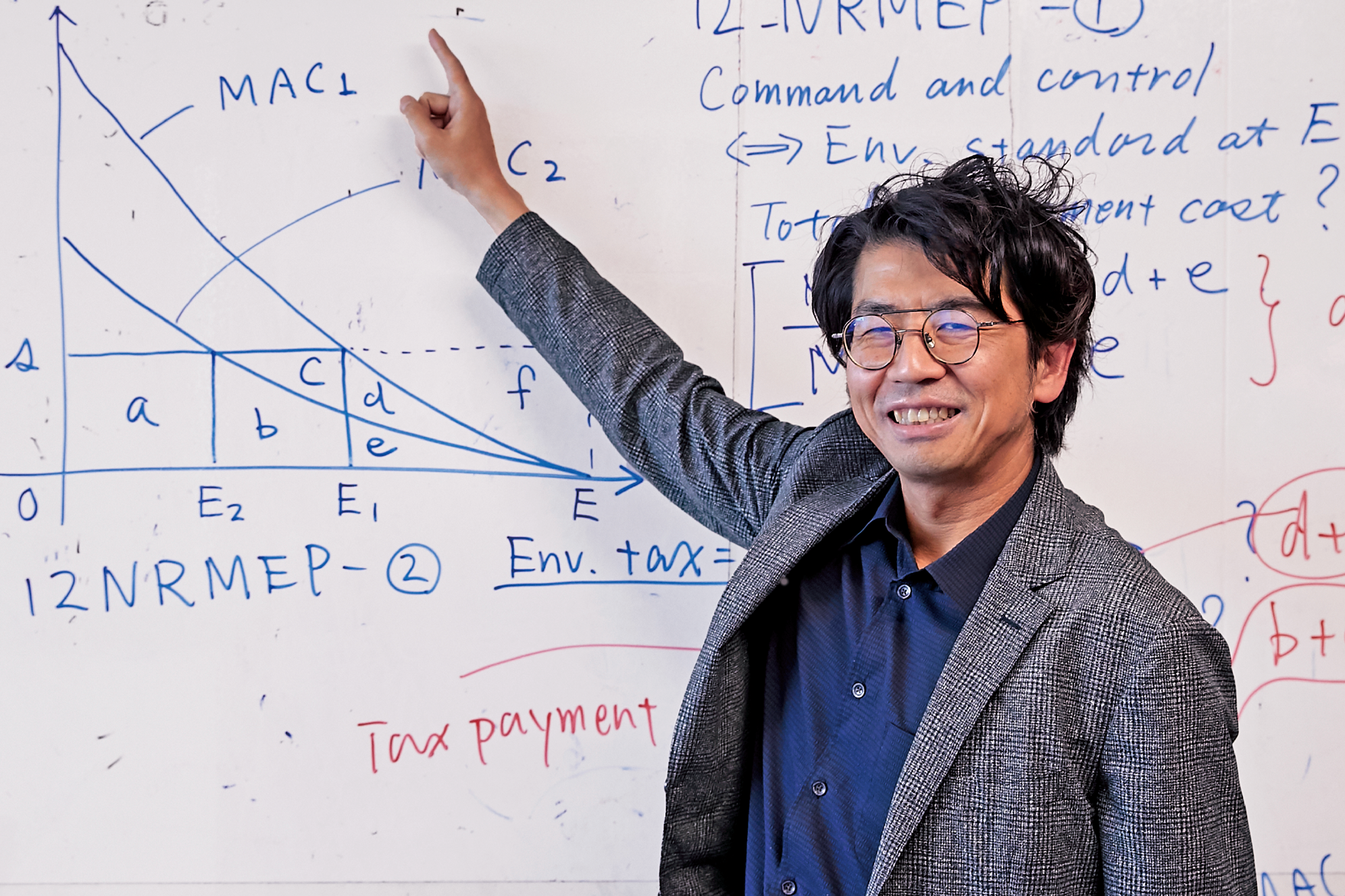
Becoming a society where people aren't afraid to stand out: Tackling the challenge of future design, starting from Kochi
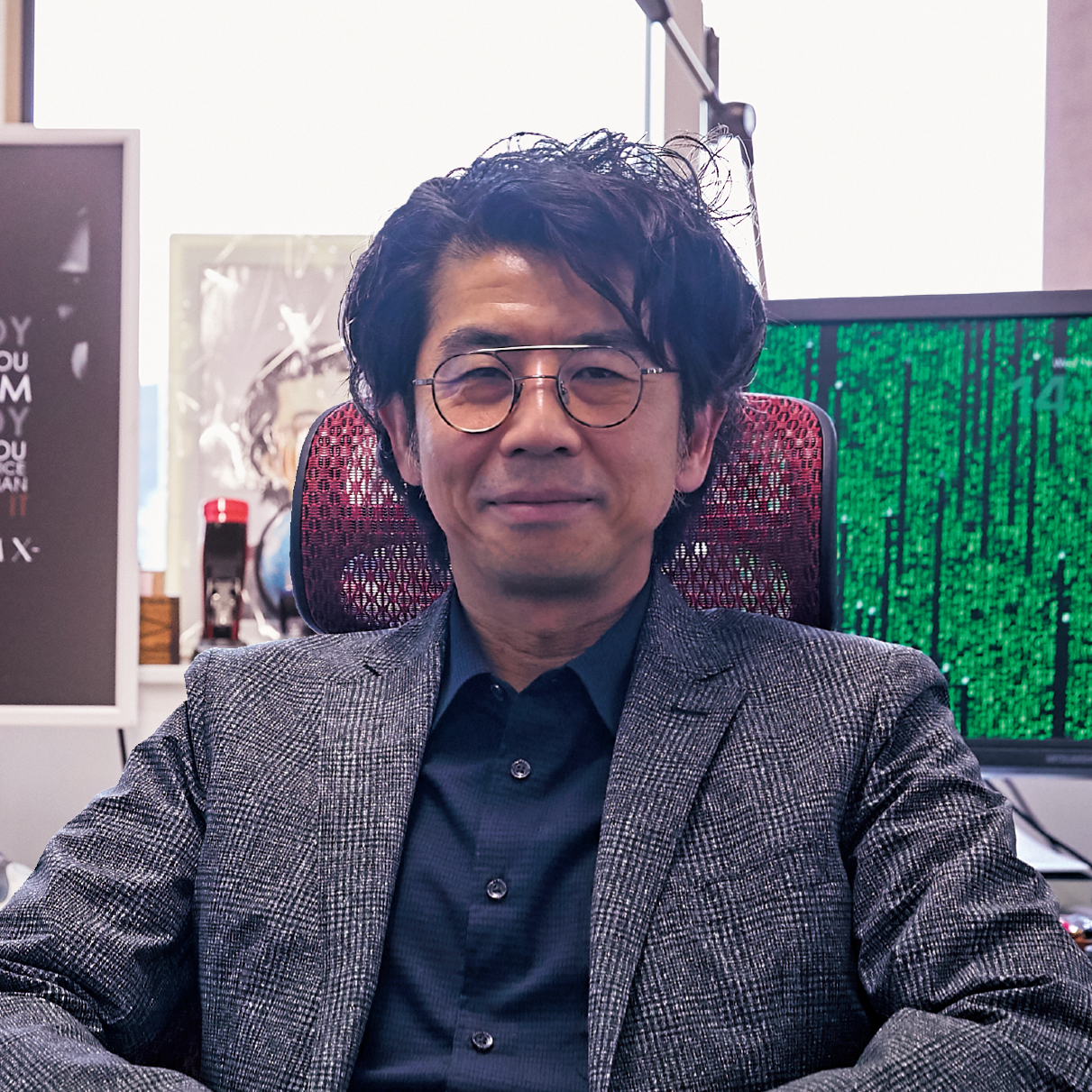
KOTANI Koji
- Specialized field
Experimental economics, environmental economics, international development and sustainability science
- What unique power do humans have, in an era when AI instantly produces correct answers? Professor Koji KOTANI of the School of Economics and Management finds the answer in "an original vision that only an individual can see." How far can people enhance their productivity and creativity when they spot issues no one else has noticed and conceive original visions? Armed with experimental economics and "Future Design," Professor Kotani explores diverse fields--from agricultural villages in Bangladesh to educational settings in Kochi. Professor Kotani is pursuing the essence of the ability to design the future, and the worlds people see lying ahead.
How does an original vision change people?
"'A society where everyone can live happily in safety and security.' It sounds plausible at first, but this isn't actually a vision."
Professor Kotani's tone sharpens as he speaks.
"People don't respond to generic slogans. A vision needs to stand out with an originality that captivates people's hearts."
In an age when AI provides optimal solutions, what's needed isn't the ability to solve given problems, but the ability to identify unseen challenges and depict the future in a person's own words. Professor Kotani--whose work cuts across the domains of experimental economics, environmental economics, and Future Design (FD)* while producing internationally-prominent results--is currently exploring a fundamental question: "How does having a vision change human behavior?"
"In business, people constantly put forward new visions, but in Japanese governmental and educational settings, people tend to get caught up in daily tasks and continually make reactive, stopgap decisions. FD is necessary to change that structure."
Normally, even when people think for the future, they get pulled back by immediately-pressing budgets and obligations. But when you take on the role of a virtual future generation--future residents looking back at the present from tomorrow--there is a marked fading of such constraints. Through this cognitive leap, you can capture an original vision and incorporate it into present-day decisions. Professor Kotani combines this FD technique with experimental economics, which verifies behavioral principles, attempting to make the invisible power of visions visible as data.
*Future Design (FD) is a method that incorporates the perspective of "future generations" to design sustainable societies. Professor Kotani is the director of the research institute that is the legacy of the founding director, Professor Emeritus Tatsuyoshi Saijo, and he is now disseminating FD from Kochi to the world.
The perspective of future generations has changed dietary habits
How exactly does envisioning the future change people's behavior? This was vividly shown in a large-scale field experiment involving 300 households in rural Bangladesh. While improving diet directly impacts health and environmental conservation, turning knowledge into habits is difficult. Professor Kotani's research team divided households into three groups--no intervention, discussion from the present perspective only, and discussion from the future perspective (FD)--and tracked changes in eating behavior over three months.
The FD group's changes were remarkable. When families envisioned what kind of dietary lifestyle they wanted to leave behind, from their children's and grandchildren's perspective 20-30 years in the future, a whole series of voluntary behavioral changes appeared, such as incorporating organic vegetables and reducing sweet beverages. As a result, the FD group's organic vegetable purchases reached about twice that of the group that engaged in discussion from the present perspective. Moreover, these effects were not temporary and persisted throughout the study period
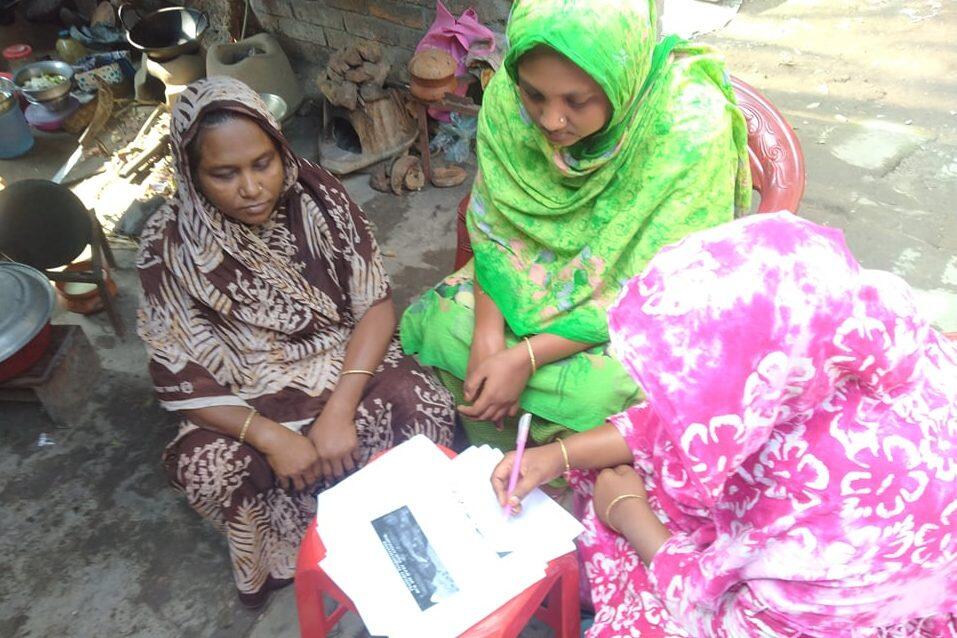
"It wasn't external pressure like subsidies or regulations that changed behavior, but rather the intrinsic desire to take responsibility for the future."
Can you answer with pride to the generation 20 years from now why you made your choices? Being conscious of this accountability to future generations and articulating that vision produces sustainable change. These findings were published in Food Policy, a top journal in the field of agricultural economics, proving to the world that FD is not mere idealism but a mechanism that fundamentally transforms human behavior.
Asking junior and senior high school students about the resolve to stand out
This research is now spreading to educational settings in Kochi Prefecture. FD workshops for junior and senior high school students are being rolled out, starting with the prefectural board of education's teacher training program "Kokorozashi Juku" (Aspiration Academy).
Professor Kotani opens by asking students this question: "Do you have a vision?" He then speaks frankly about the reality of capitalist society. "If you only do work that AI or others can do, you'll get caught up in price competition. It will be hard to increase your salary unless you stand out with something only you can do." He cites names like Shohei Ohtani and Elon Musk, then presses the students: "At what level do you want to start standing out?"
Of course, they don't have to have an answer right away. There's value in recognizing where they are now--i.e., not yet having a vision--and beginning to think about a direction. That's right, FD is also education for helping people recognize what they themselves want.
"Society's productivity and creativity will increase dramatically if more young people forge their paths with their own unique visions. What I think Japan lacks right now is that sort of independence of mind. I want to make FD a new pillar of education and demonstrate, from our base here in Kochi, that society can become more creative."
True to these words, this initiative doesn't end with just work in class. Professor Kotani envisions conducting long-term follow-up studies on how students with their own visions subsequently change their behavior. He will accumulate data from actual practice in educational settings and scientifically demonstrate the power of vision. All activities are connected by a single thread: research.
Taking the study of "direction"--future design--from Kochi to the world
Professor Kotani may constantly ask young people about direction now, but at the root of this lies his own bitter memory. He entered a science program but was overwhelmed by a strong sense that something was wrong and was driven to the brink of dropping out. The turning point was an economics book he happened to pick up at the library. He was struck by a single sentence: "Economics is the only discipline that determines direction." This sparked the thought: "If anything, I want to study a field that considers the world's direction." So he pursued environmental economics and went to America. His mentor abroad recognized his aptitude, and he steered toward the path of a researcher.
"I resolved to 'stand out' when I was 24. Until then, I had never pursued being myself, nor been asked about it by anyone. I was angry at Japanese education and society, and at myself for just going with the flow. That's what drives my work today."
Students from Japan and abroad gather around Professor Kotani, advancing research on diverse themes like food and the environment. While some projects are ambitious and require substantial budgets, the Kotani way is to move forward without hesitation, taking the approach of "doing everything we can."
"Research is an intellectual adventure. The more you engage with it, the more your view of the world changes and the more your interpretations get updated. Creating value that remains even after you're gone and passing that value to the next generation... That journey itself is what's enjoyable."
Furthermore, Professor Kotani speaks about the significance of practicing FD in Kochi:
"It's meaningful to do this precisely because Kochi has so many challenges. When people are cornered by problems, what's needed to break through the status quo is, after all, a new vision."
Through FD, Professor Kotani wants to spread a culture of thinking about direction throughout society. And he speaks cheerfully about how "it would be wonderful if someday FD grows around the world as a discipline born in Japan." Disseminating FD to the world from Kochi, a prefecture at the forefront of facing difficult challenges. Seeing his expression as he gazes straight ahead to the future, it makes you think that day of realization is not so far off.
Date of posting: February, 2026 / Date of interview: November, 2025